Showing posts with label NLOTH. Show all posts

Wednesday, April 3, 2019

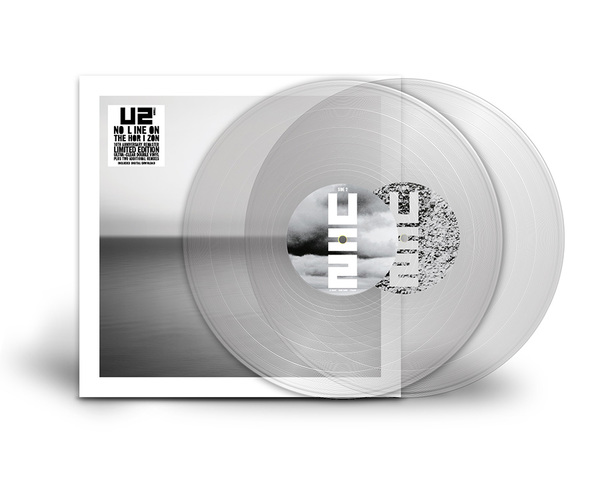
No Line on the Horizon: Ten Year Anniversary


Velvety. Groovy. Classic. Revealing…
At ten years of age, No Line On The Horizon, remastered, with new remixes and on double vinyl.
Friends of the band have something to say:


https://u2.tumblr.com/post/182980515775/velvety-groovy-classic-revealing-at-ten-years

https://u2.lnk.to/NLOTH


Thursday, November 3, 2011

Is it time for U2 to call it a day?

Neil McCormick gives us his view on the last "talks" about the possibility of U2 coming to an end.
The Edge and Bono have also contributed to the plot and dialogue (Photo: Getty)

There has been a lot of internet chatter about whether U2 are breaking up, following comments from Bono in Rolling Stone. He has been talking a lot recently about U2 having been “on the edge of irrelevancy for 20 years” and suggested “We’d be very pleased to end on No Line on the Horizon”. Despite a failure to deliver a hit single and a general perception that it wasn’t a classic, the album has recently reached the five million sales mark, and U2 have just completed the biggest, most technologically ambitious and highest grossing tour in rock history. Q magazine just presented U2 with an award for Greatest Act of the Last 25 years. Might it represent an opportune moment for U2 to bow out?
There is no set process for a band to break up. Usually it happens more or less accidentally and spontaneously, through internal conflict. Often it is accompanied by a decline in popularity and increasing creative divisions. But when you have been together as long as U2 (36 years and counting), and successful throughout your career, a kind of inertia can set in, where the band continues to exist just because, well, it continues to exist.
REM have been widely applauded for their recent decision to disband because of a sense that their best  days were behind them. The Rolling Stones continue despite of it, taking the critical flak to deliver music and entertainment for their massive fan base. You can’t say one is right, and one is wrong – it is each according to his own. But REM are close to U2, and belong to the post punk generation for whom an allegiance to rock bands came with high ideals and a sense of purpose. Talking about REM’s break up on Newsnight this week, Mike Mills explained that “It was an opportunity for us to walk away on our own terms. There are no external forces, no problems, we can walk away as friends and feel like we’ve accomplished everything we wanted to accomplish.”
U2 have certainly accomplished a lot, probably more than they ever dreamt… although they did dream big. I’ve got Bono on tape when Boy came out, in 1980, enthusiastically telling me that one day they would make a record as great as Sergeant Pepper. They’ve been the biggest rock band in the world for much of their career, they have constantly reinvented and reinvigorated themselves musically, done ground breaking and record breaking tours, and been at the centre of political and charitable campaigns that have helped shape the world we live in. I think this is part of the problem, actually, the very cause of the existential crisis the band find themselves in. Bono likes to be at the centre of things, part of the musical, political and cultural conversation. “Lots of people have U2 albums, why they would want another one is a reasonable question,” he admitted recently. “I don’t know if it is possible for us to make something that is current that is meaningful, not just to our audience but to the times we live in. But that’s kind of the job for me.”
U2 have recorded a lot of music over the past couple of years, with a lot of different producers, including new songs with Danger Mouse (aka Brian Burton, the cut and paste wizard behind Gnarls Barkley), clubby pop tracks with Red One and meditative, quasi-ambient material with their established team of Brian Eno and Daniel Lanois. I would like to hear those records. But there seems to be little sense in the band camp that this is music the world needs right now, something singular and original and powerful enough to stand up with their very best, as big and bold as the sprawling emotion of Unforgettable Fire, the rough hewn rock of The Joshua Tree, the industrial strength invention of Achtung Baby or killer tunes of All That You Can’t Leave Behind. And so they just keep chipping away, in search of that elusive creative breakthrough. But can a band of super rich middle-aged men ever achieve the creative heights of their youth, when making music really seemed like a matter of life or death?
Bono’s conviction that they have to create something world beating every time effectively creates a rod for their own backs. What bands have ever done their greatest and most resonant work in the middle age of their career?  When U2 made their early classics, they worked day and night in pursuit of an ideal, sacrificing personal time and private lives, giving everything to the cause of the music. Inevitably that is not the case any more. They arrange meetings and recording sessions to fit with their increasingly complex personal schedules.  Their fans may still like to believe that U2 live in Ireland and meet in the local pub or prayer meeting (hence the ludicrously inaccurate tax avoidance charge that keep being made against them). In fact, Bono lives mainly in New York now, The Edge in LA, Adam in London and only Larry remains a more or less full time resident of Dublin. They have all (apart from Adam) got wives and children who need time and attention. They have the kind of extreme wealth that ensures fabulous comfort. And Bono, their driving force, finds his time and energy much diluted by his sprawling range of extra-curricular interests and commitments, particularly political and charitable activities that inspire much antagonism in people who think a rock star should be in the business of making rock music. As Bono recognises, “We’re the most loved and the most hated band on Earth” and a lot of the reasons people don’t like them are actually about him – which he says he understands “because I have to live with me too.”
I was supposed interview Bono last week about the 20th anniversary re-release of Achtung Baby but he called it off because he felt he had done enough promotional work, and needed to take a break. He says he is becoming embarrassed by the amount of focus there is on him, as opposed to the rest of the band. It is a running joke that he sympathises with people who are sick of the sound of his voice, because he is too. And he’s plainly worn out. Or as he put it in an apologetic message: “Flat on my back from exhaustion.”
U2’s two year world tour may have finished in the summer but sometimes I think Bono just doesn’t know how to stop. He has continued his ceaseless globetrotting in connection with all his philanthropic, humanitarian and business commitments. He sang at Steve Jobs memorial in California on October 17, met Nicholas Sarkozky in Paris on the 19th as part of a lobbying group for the Global anti-poverty coalition One ahead of the G20, and was in London a few days later with the rest of U2 to pick up their award from Q magazine. It is hardly surprising that he told Rolling Stone his only future plans were to have some time off: “I want to take my young boys and my wife and just disappear with my iPod Nano and some books and an acoustic guitar.” Then on Monday, this week, he was in Dublin, as part of a delegation trying to convince foreign technology companies to invest in Ireland. He is the rock star who can’t say no.
Which is why, personally, I don’t think U2 are likely to do an REM and retire gracefully. If they ever do go, it will be in a blaze of glory or an act of outrageous folly, broken by their singer’s mad ambition. Right now, it is probably fair to say U2 need a break and the world needs a break from them. But U2 fans have heard these hints of disillusion and dissolution before – notably in 1989, after the excesses of Rattle And Hum, when Bono declared they had to “go away and dream it all up again.” They came back with Achtung Baby in 1991, probably their finest moment.
From my experience, what they tend to do is manufacture a sense of crisis to drive them. Edge refers to it as jeopardy, a constant buzzword in his discussions of their creative process. U2 need to feel that there are things at stake when they are writing and recording, deliberately using tension and risk to maintain focus. This, presumably, gets harder the more successful and comfortable individuals get. When Bono declares U2 to be on “the edge of irrelevance”, what he is really doing is raising the stakes for himself and his band, shoving them rudely out  of their comfort zone.
U2 are in temporary retreat while their leader recharges his batteries, but his own self-questioning is not actually an indication of disillusion, but an instigation to action. Fans worrying that Bono’s remarks suggest U2 are about to call it a day could not be more wrong. What he really wants to do, indeed what he feels he needs to do, is for U2 “to go away and create the album of their lives.”
I don’t know if it is possible for a band with their long history to reinvent themselves again. But, like millions of other fans, I want to hear them try.

www.telegraph.co.uk

Sunday, October 23, 2011

U2 Need to Dream It All Up Again

Bono says U2 are under more pressure to make a good album now than they were when they recorded the career-defining Achtung Baby 20 years ago.


Echoing his "we need to dream it all up again" words when U2 played Dublin's Point Theatre on New Year's Eve in 1989, he told The Irish Times: "It's actually worse for us now than it was when we went to Berlin. We can play the big music in big places. But whether we can play the small music, meaning for the small speakers of the radio or clubs, where people are living, remains to be seen. I think we have to go to that place again if we're to survive.
"There are so many U2 albums out there. We need a reason for another one. The whole point of being in U2 is that we're not here to be an art-house band. Our job, as we see it, is to bring the art house to the mainstream; our job is to puncture the mainstream."
The singer says he sees the future of the music industry in new technology and new formats. "Our last album was the first album to be made available as an app with BlackBerry devices, but it didn't work: the functionality was not what it could have been," he says.
"New formats are going to happen. I'm always banging on about this. The app format brings you back to that world of gatefold sleeves, of being able to read lyrics - and being able to play the album at home on your plasma TV."
Bono also defended the sales performance of the band's 2009 album, No Line on the Horizon. "We're just about to come to five million sales on No Line on The Horizon, and that, these days, is the equivalent of selling 12 million records," he says. "You can actually do the figures on that. So when you look at it like that, it has the same sales as All That You Can't Leave Behind.
"That's despite the fact that No Line doesn't have A Beautiful Day and doesn't have a Stuck in A Moment. There's no pop song on No Line, but it's still sold that amount. It's been an amazing success for an album which is quite a complex piece of work and doesn't have one single pop song on it."
"People say Get on Your Boots was the wrong single, but it's great live. Unfortunately in the last few weeks of finishing the album, we didn't have the objectivity. We figured out Get on Your Bootslater, when we were on the road and it became a much better song. I think Unknown Caller is a classic, as is Moment of Surrender."
U2 release the 20th anniversary edition of Achtung Baby next week.

Tuesday, January 5, 2010

Edge Talks to Neil


Neil Mc Cormick has posted an interview with Edge in his Culture blog in The Telegraph.

The documentary feature film ‘It Might Get Loud’ opens in the UK this Friday, January 8th , about a meeting between three iconic guitarists of different rock generations: the legendary Jimmy Page of Led Zeppelin, garage blues primitivist Jack White of The White Stripes and U2’s professorial effects master The Edge. My interview with Jimmy Page ran in the Telegraph last week but while researching it I spoke to The Edge, who called from LA just before Christmas. Here, for U2 and guitar fans, is that conversation in full, in which Edge discusses the past and future of the guitar, U2’s new album, why they might play new songs at Glastonbury, the fate of Spiderman and the Edge’s previously unremarked resemblance to a Hollywood sex symbol.

It´s not often that you might find yourself on stage with some of the greatest guitarists in the world, so what did you learn from the experience?

What did I learn? Even though all guitar players are reaching for the ideal guitar tone, I was struck by how different they sounded, and in the hands of other people with different set of ears to put a sound together, its such a different result, and it just showed me how the instrument is so versatile. A trumpet sounds pretty much like a trumpet, and that’s true of a lot instruments, pianos sound like pianos, but there’s something about the guitar, the range of possibilities is much broader. And I really felt our differences influences and points of view were really contained within our sound and choice of sound and ways of playing.

Indeed, the way the different personalities express themselves through their instrument is something that comes across very clearly in the film. Yet while the individual journeys that bring you to that shared stage are fascinating, when you do all get together, there’s no great musical explosion, just a lot of tentative twiddling, really.


That was the other thing I learned: how useful drummers and bass players and singers are! Put three guitarist together in a room and what you get is lots of guitars. Also I was thinking about what would I play out of my stuff for these guys, and I realised what I do isn’t really designed to be heard solo. Its not like I sit down and write a guitar piece and that becomes a song. I actually rely on what Adam and Larry are doing to complete the picture. The Streets Have No Name doesn’t make any sense out of context, it just becomes this very Philip Glass like set of motifs, and the meaning is really in the changes in the bass and drums. So that was actually a nice realisation, I’m one of those guitar players who’s really integrated into his band. I’m not like Jimmy or Jack, who can play solo guitar that would stand up on its own.

Do you often play with other guitarists?

No, I try and avoid it at all costs. Jamming is really the most awful, excruciating experience for me, I really don’t enjoy it. First of all, that’s not how I work as a guitar player. I compose using the instrument, I don’t really sit down and play for the sake of playing stuff. So the idea of jamming – endless, directionless noodling around some nondescript chord progression – I really find very boring. Obviously a great song is fun to play, but U2 were never really in that phase of The Beatles in Hamburg or Van Morrison in showbands or Dylan in the folk clubs, of knowing and learning a big collection of classics. We never did that, and at the time we were forming as a band there really wasn’t a large collection of songs that we felt like learning. It was actually a moment where the past was being thrown out the window, so its very much part of our DNA as a band not to be too reverential, as a general rule, and to try and look forward all the time. Invention being what we value most highly as opposed to emulation – which is what a lot of musicians feel is important, being able to play like the greats.


So what did meeting Jimmy Page mean to you, because at the time of U2’s origins, at the beginning of punk, Led Zeppelin and the so called dinosaur rock bands were almost seen as the enemy, something to be rebelled against.


Before meeting Jimmy, I listened back to some Zeppelin stuff and realise it has stood the test of time. It has the hallmark of timeless music, it hasn’t dated, while so much from that era really did date and in fact has completely vanished. It was really dynamic, the visceral power of it was pretty thrilling still, and it brought me back to when I was 14 or 15. That was a nice realisation. And also meeting the man and realising we had so much in common, and actually we are kind of brothers in arms rather than antagonists in terms of musical philosophy.

So what did you find that you had in common?

I think what has come through, after all the dust has settled on the music of that era, is that everybody assumed that what was important was improvising and having a dexterity with the instrument, so that Eric Clapton and Jeff Beck, the gunslingers of the time, were highly revered, but it turns out it was actually always about composition, always about idea and themes and stuff that you actually had to write. And that where I think Jimmy Page scored, is that his guitar playing was a lot more composed than any of the others of that era and much better for that. And although it’s probably uncool to admit it – and I don’t know if he would ever admit it – but even his solos were really well composed and thought out. I don’t think he was just a guy who would sit down and play the first thing that came into his head, like a Gary Moore, Jeff Beck or Eric. I think he really had the chance to figure things out. It’s the discipline of the work. Its really sharp, really hard, not fuzzy. That was one of the realisations for me.


If you were to listen to a collection of the best selling singles of the last year, the guitar is almost noticeable by its absence. When it comes to pop music, its all about synths and electronically treated sound, so even where there is a guitar, its not necessarily recognisable, or the featured instrument. What do you think is the future of the guitar?


I don’t think it’s in jeopardy. It seems pretty bright. There’s always somebody on the horizon who seems to be really able to make the instrument their own, and find ways to use it that haven’t been heard before. The biggest band in America right now, in terms of profile and records is The Kings Of Leon, and before them it was The Killers, so there seems to be still a huge interest in guitar music. I’m looking forward to the next Arcade Fire album, and I think Nick Zinner from Yeah Yeah Yeahs is a guitar player who’s really done some interesting things. Ok, the electronica movement seems to be very much in vogue at the moment, probably MGMT kick started that, then you’ve got Justice and the Bloody Beetroots and all that hard dance stuff, but the guitar is managing to hold on, its one of the essential ingredients in contemporary music, like drums. Them Crooked Vultures is also quite cool. I’m not sure it’s on the level of classic but it’s a very interesting guitar record.

It’s been a strange year for U2. You had the biggest tour in the world and sold about four million of your album No Line On The Horizon, but it never really caught fire the way other U2 albums have. Indeed, its perceived as a flop.


Yeah, there is that smell in the air. We allowed ourselves to think about having a big hit record when in fact it’s a very interesting record but it’s quite a dark record, it’s not really radio friendly. Even ‘Get On Your Boots’, which is high octane, its not a slam dunk of a hit song. I think everyone just got caught up in the plan as opposed to sitting back and thinking about the record we’d made. But I feel OK about it. Often U2 are accused of being more successful than we deserve, in this case I think this record is less successful than it deserved. I think its got some of the best songs we’ve ever written. ‘Moments Of Surrender’ is right up there, and ‘Unknown Caller’.

What about the new album, the long rumoured ‘Songs Of Ascent’, which is supposed to be based around more low key material from the Horizon sessions.

Well that’s what I’m working on this week, actually. I’m songwriting. In fact, I wrote something this morning just before getting on the phone with you, it sounds great. So on that level we’re pushing forward, we’re not taking it easy, but we won’t really know til the new year what we’ll be able to achieve. There’s a certain sort of practical window of opportunity to release the record that we are operating within. If the material isn’t ready for the early new year we’ll probably have to put it on hold. But I’m looking forward to the idea of playing some of the songs live before they’re released. That would be my consolation prize if we don’t get the album done. We’ve never done it, we’ve always talked to all of our producers about the idea, but I think it would give the tour a little frisson which I think it needs. If you have two or three new songs no one’s heard before thrown in from time to time, I think that would be very exciting, for us as well, to try them and see how they get on.

So we can expect to hear new U2 songs at Glastonbury.

Glastonbury is going to be fun. I’ve never been.

I think Adam is the only member of U2 whose been to Glastonbury. He went with the Waterboys in the Eighties

We’re busy men! We’re often actually doing U2 tours when Glastonbury is on, or working on a project, so its not so strange that we’ve not been. But what is interesting is the way people talk about it, its got this semi-religious aspect. Bono and I were talking about our last record, one of the sub plots is pilgrimage, and in some ways that’s exactly what Glastonbury is. So we’re going to make our pilgrimage.

And what about Spiderman, the musical you have been working on with Bono, which seems to have run into a few funding problems?

It’s in this hiatus and were just waiting for word on the fundraising to get the production back on track. All the songs are pretty much written, we’ve got a bunch of lyrics to finish off, but all the music is pretty much there, and its all sounding really convincing. It’s a great script, great director, great choreographer. It will happen.

So 2010 is shaping up to be another busy year for U2

And they’re shooting the film of your book (Killing Bono). That’s great news. I was talking to the director about who should play me, and I think we agreed on Brad Pitt.

by Neil Mc Cormick


source:http://blogs.telegraph.co.uk
Saturday, December 19, 2009

"No Line on the Horizon": RS 2009 Best Album


Rolling Stone magazine has chosen NLOTH as best album of 2009 .

1. U2 NO LINE ON THE HORIZON
Interscope

Aiming for rock glory, Bono, Edge, Adam Clayton and Larry Mullen Jr. explore dark places ("Moment of Surrender"), find modern twists on their classic anthems ("Magnificent") and uncover blindinglight soul ("Breathe"). The result was an album with a sense of drama that no one could match all year — more proof that a band that isn't busy being born is busy dying.


And "Moment of Surrender" as the best song of 2009.

1. "Moment of Surrender" BY U2


source:www.rollingstone.com

Wednesday, December 2, 2009

Brian Eno on some songs in No Line on the Horizon

Some days ago U2.com posted a video where Brian Eno talked about some of the songs of NLOT.

"Long, drawn out confession" 'I'm here and I'm lost and I don't really know where I'm going...' That's the sense you get with Cedars of Lebanon, the last track on No Line on the Horizon, one of the great, unsung tracks from No Line on the Horizon. A 'lovely piece' says producer Brian Eno, which all started with 'a sample from a record I did with Harold Budd in 1980...'