Showing posts with label campaigns. Show all posts

Wednesday, November 23, 2016

Bono at Jimmy Kimmel's


In honor of World AIDS Day on Dec. 1, Jimmy Kimmel Live! is kicking off (SHOPATHON)RED, featuring limited edition (RED) products, plus once-in-a-lifetime experiences with celebrities via OMAZE.

"Thanks to the kindness of some of the biggest stars in the world, we have a great show for a great cause," Kimmel tells E! News in a statement. "World AIDS Day is Dec. 1 and I'm honored to be a part of this very special night to benefit (RED)."

Bono will sing a re-worked version of Cole Porter's "Well, Did You Evah!" and the Killers will perform Christmas songs. "The Killers are doing Christmas songs to end all Christmas songs," Bono said with a laugh, "which actually, believe or not, has me singing, 'If you don't help people with AIDS you're going to hell.'" Kimmel revealed he wrote that line, while Brandon Flowers wrote the rest. "But that's true — if you don't help people with AIDS you are going to hell, and that seems like a good enough reason to help alone," he said. "I mean, just think of yourselves."


Un té con Bono y Julia Roberts

http://www.eonline.com/

https://www.omaze.com/red

Enjoy a Cup of Tea with Julia Roberts and Bono

juliaroberts,julia,tea Banner

Support (RED) and Enjoy a Cup of Tea with Julia Roberts and Bono

You and a friend will:

Have the best tea time of your life with Bono and Julia Roberts
Discuss movies, music and more with some incredibly talented artists
Seriously, you need another reason to do this?
Get flown out and put up in a 4-star hotel


To celebrate (RED)’s 10th anniversary, The Bill & Melinda Gates Foundation will match every dollar raised by (RED) this year up to $78MM.


(RED)


Tuesday, November 22, 2016

Meet U2 and Attend a Private Rehearsal Show

bono,u2,U2,theedge,edge Banner

Meet U2 and Attend a Private Rehearsal Show

You and a friend will:
  • Sit front and center for a private U2 rehearsal show
  • Meet the band and take photos with them
  • Get flown out and put up in a 4-star hotel in a city on U2’s upcoming tour
To celebrate (RED)’s 10th anniversary, The Bill & Melinda Gates Foundation will match every dollar raised by (RED) this year up to $78MM.

What you'll do

Their tours have shattered records across the globe, but for one lucky fan, the biggest U2 show of the year just might be the smallest. That’s right—you and a friend will get flown out to meet U2 for a private, full dress rehearsal show during the band’s 2017 tour. It’s a front row, backstage, VIP experience all rolled into one. You’ll meet the band for sound check and then settle in to hear your favorite U2 songs during an intimate performance like no other. In other words, you’re not just getting the best seats in the house; you’re getting the only ones. Flights and hotel are on us.

Who you'll help

Today and every day 400 babies are born with HIV. We can get that close to zero as soon as 2020 if we all act now.

The life-saving ARV pills that prevent HIV+ moms from passing the virus to their unborn babies cost just 30 cents a day in sub-Saharan Africa. When you donate to win a (RED) experience on Omaze, you're helping to ensure more moms get access to that medication, and you're helping get closer to the goal of an AIDS FREE GENERATION.


Let’s end AIDS now.


(RED)


ttps://www.omaze.com

Bono Recruits One Direction's Liam Payne, DJ Khaled and More For AIDS Fundraising Campaign


If you donate at least $10 to Bono's charity (RED), the singer is giving you a chance to drink tea with him and Julia Roberts, enjoy a private concert from U2 or party in Las Vegas with "Magic Mike" star Channing Tatum.
Those are three of the "experiences" donors can possibly win after giving money to (RED), which raises funds to fight AIDS. The campaign dubbed "(RED) SHOPATHAN," in its second year, launches Tuesday, one week before World AIDS Day, which is Dec. 1.
"It is a battle now for funding. It's just a street battle, pitch battle, and we have to keep this stuff in the news or literally those people don't get the drugs. It's that simple," Bono said in an interview with The Associated Press last week. "We have to just remind people that America has led the war on this tiny little virus and is winning the war, but it is unthinkable, but it is possible, that if we stall on funding then we start to undo all this good work."

Other "experiences" that can be earned after donating on Omaze.com/RED include a night out with Neil Patrick Harris; tickets to see Broadway's "Hamilton" and backstage access with show star Javier Munoz; a Snapchat and jet ski adventure with DJ Khaled; and a studio hangout with One Direction's Liam Payne.
The campaign will return to Jimmy Kimmel Live! for a full show on Tuesday night, where Bono, The Killers, Herbie Hancock, DJ Khaled and Halsey will perform, while special guests include Roberts, Tatum, Patrick Harris and Kristen Bell.
Bono will sing a re-worked version of Cole Porter's "Well, Did You Evah!" and the Killers will perform Christmas songs.
"The Killers are doing Christmas songs to end all Christmas songs," Bono said with a laugh, "which actually, believe or not, has me singing 'if you don't help people with AIDS you're going to hell.'"
"I wrote that line," Kimmel said during the interview about the original song, written with Brandon Flowers of The Killers. "But that's true - if you don't help people with AIDS you are going to hell, and that seems like a good enough reason to help alone. I mean, just think of yourselves."

Last year's campaign offered donors a visit to the set of Game of Thrones, walking a red carpet with Meryl Streep and spending time with George Clooney. This year's offers also include flying to Korea to hang out with K-Pop star G-Dragon and a "VIP Virgin event experience" with Virgin Group founder Richard Branson. Entries close on January 18, 2017.
"This is a really hopeful campaign and we try to be playful, we try not to bring anyone down, but actually the politics behind it is very serious. And the money we raise will keep people alive," Bono said.
This year marks (RED)'s 10-year anniversary, which Bono said has raised more than $360 million and impacted 70 million people through HIV testing, prevention, counseling and other services.
"This is a big deal in my life," he said.

http://www.billboard.com/

Tuesday, August 30, 2016

Bono in Nigeria for ONE


Rock star, Paul David Hewson, (aka Bono) and Africa’s richest man, Alhaji Aliko Dangote, yesterday met with the Vice President, Prof. Yemi Osinbajo at the Presidential Villa to discuss the possibilities of a global partnership to address the humanitarian crisis in North-eastern part of the country through international advocacy.

A statement by the Senior Special Assistant to the Vice President on Media and Publicity, Mr. Laolu Akande, said Osinbajo told the delegation that the federal government would welcome a global partnership that would ensure a concerted and focused international response to the humanitarian crisis in the North-eastern region.
Bono leads the ONE campaign group, an advocacy organisation with more than seven million people around the world taking action to end extreme poverty and preventable diseases especially in Africa.

It has on its board people like Mo Ibrahim, Bill Gates, Michael Bloomberg among others. It was founded in 2004.

Addressing members of the delegation that included former UK Development Secretary Douglas Alexander, Osinbajo said: “It is very important that you chose to come and offer some partnership. This is great and we are pleased…Partnership is certainly the way to go.”

He said no matter how prepared a country could be, handling the kind of crisis in the North-east with two million displaced people including children would prove a difficult task.
According to him, a global partnership to address the situation should be coordinated and more focused on what was required to be done, for instance, in addressing the issue of malnourished children and not attempting to do too much things at once.

Speaking earlier, the Irish-born artist, Bono, said he had visited some of the IDPs, saying “We want to be useful to you.”

Bono added that what he saw in the region was “deeply disturbing.”
He also commended the social investment programmes of the President Muhammadu Buhari administration, saying: “We have heard of the incredible plans, the social investment funds,” adding also that the level of transparency already seen in the administration is both “very exciting and transforming.”

Meanwhile, Dangote, monday at the meeting, disclosed that a total sum of N4.5 billion had so far been spent by the Dangote Foundation in trying to provide succour to IDPs in Borno, Yobe and Adamawa States, which have been ravaged by the Boko Haram insurgency.
He added that the foundation would continue to reach out to the victims until the end of the current programme by government to restore normalcy to the people.

Bono, who is currently in the country to draw international support for victims of insurgency in the North-east said funding to the region needed to be scaled up in order to achieve maximum impact.

Bono further lamented that of the estimated $300 million required as part of the reconstruction programme, only about $100 million had so far been realised, stressing that going by the magnitude of destruction and deprivation in affected areas, there’s need to scale up resources to cope with the humanitarian crisis.

He said working with the Dangote Foundation, he would use his ONE Campaign NGO platform to garner global support towards addressing the plight.

According to both Dangote and Bono, the new partnership will focus on the most marginalised citizens, particularly girls and women, who face the brunt of poverty and help empower those most at risk from extreme poverty, extreme climate and extreme ideology.

Specifically, Dangote said: “I am in ONE and partners across Nigeria to strengthen civil society and help the government respond to our ongoing health needs and the urgent malnutrition crisis in North-east Nigeria. ONE’s extensive network of youth groups and its 2.3 million members will help bring international attention to and action on these issues. All of us can and must do more.”
On his part, Bono, an ambassador for the United Nations High Commission for Refugees (UNHCR) and the leader of the rock group, U2, said: ”I am proud to be standing alongside Dangote, whose foundation works for the future of Nigeria and Africa through its young people. The youth of Nigeria, Africa and indeed everywhere are like rocket fuel- there are no limits to how far they can go, they can transform the continent-or they can blow up in your face. Harnessing their energy requires investment in their education, employment and healthcare.”

Bono said he was particularly heartbroken at the condition of displaced persons-some children never knew their parents and some severely malnourished.

A particular account was painted by Dangote, where Bono asked a woman in Borno State why she had not breastfed her child – only for the woman to strip her chest bare, revealing her breasts and telling Bono she had no milk to give to the child – once again, depicting the horrible condition of the humanitarian crisis at hand.

However, the new partnership will help amplify the calls of million of Nigerian ONE members, who have been campaigning for years on issues including health, anti-corruption and agriculture.
This year’s Make Naija Stronger campaign calls for the government to deliver on its commute, net to invest more in healthcare.

ONE campaign is a powerful global advocacy group which was instrumental in Nigeria’s debt cancellation, which led to its exit from the Paris Club and it’s incursion into the country at the request of Dangote is expected to produce more concrete results in the rebuilding of the North-east.

http://www.thisdaylive.com/
https://www.one.org

Thursday, May 19, 2016

The Edge has a message for all of us

"Disease prevention has become a crucial new strategy to explore. It is also becoming achievable for the first time in history."


To learn more about cancer prevention, refer to https://www.eattobeat.org
To support the campaign, please consider a donation at https://www.angio.org/donate

Tuesday, May 3, 2016

African Well Fund:Dream Out Loud


From May 1st to May 31st the African Well Fund invites U2 fans and others who are inspired by Bono’s tireless activism on behalf of Africa to donate to the 14th Annual Build a Well for Bono’s Birthday fundraiser in honor of Bono’s 56th birthday.

The 13 previous campaigns have raised over $245,000 in Bono’s honor to fund the construction of clean water and sanitation projects implemented by AWF partner Africare that are benefiting more than 73,000 people in Angola, Benin, Burkina Faso, Liberia, Mali, Uganda and Zimbabwe.
This year they  hope to push past a quarter of a million dollars. Donate!!

http://africanwellfund.org/

Tuesday, April 12, 2016

Bono: Time to Think Bigger About the Refugee Crisis

Bono with kids at a refugee camp 

I’VE recently returned from the Middle East and East Africa, where I visited a number of refugee camps — car parks of humanity. I went as an activist and as a European. Because Europeans have come to realize — quite painfully in the past year or two — that the mass exodus from collapsed countries like Syria is not just a Middle Eastern or African problem, it’s a European problem. It’s an American one, too. It affects us all.

My countryman Peter Sutherland, a senior United Nations official for international migration, has made clear that we’re living through the worst crisis of forced displacement since World War II. In 2010, some 10,000 people worldwide fled their homes every day, on average. Which sounds like a lot — until you consider that four years later, that number had quadrupled. And when people are driven out of their homes by violence, poverty and instability, they take themselves and their despair elsewhere. And “elsewhere” can be anywhere.

But with their despair some of them also have hope. It seems insane or naïve to speak of hope in this context, and I may be both of these things. But in most of the places where refugees live, hope has not left the building: hope to go home someday, hope to find work and a better life. I left Kenya, Jordan and Turkey feeling a little hopeful myself. For as hard as it is to truly imagine what life as a refugee is like, we have a chance to reimagine that reality — and reinvent our relationship with the people and countries consumed now by conflict, or hosting those who have fled it.

That needs to start, as it has for me, by parting with a couple of wrong ideas about the refugee crisis. One is that the Syrian refugees are concentrated in camps. They aren’t. These arid encampments are so huge that it’s hard to fathom that only a small percentage of those refugees actually live in one; in many places, a majority live in the communities of their host countries. In Jordan and Lebanon, for example, most refugees are in urban centers rather than in camps. This is a problem that knows no perimeter.

Another fallacy is that the crisis is temporary. I guess it depends on your definition of “temporary,” but I didn’t meet many refugees, some of whom have been displaced for decades, who felt that they were just passing through. Some families have spent two generations — and some young people their entire lives — as refugees. They have been exiled by their home countries only to face a second exile in the countries that have accepted their presence but not their right to move or to work. You hear the term “permanent temporary solution” thrown around by officials, but not with the irony you’d think it deserves.

Those understandings should shape our response. The United States and other developed nations have a chance to act smarter, think bigger and move faster in addressing this crisis and preventing the next one. Having talked with refugees, and having talked to countless officials and representatives of civil society along the way, I see three areas where the world should act.

First, the refugees, and the countries where they’re living, need more humanitarian support. You see this most vividly in a place like the Dadaab complex in Kenya, near the border of Somalia, a place patched together (or not) with sticks and plastic sheets. The Office of the United Nations High Commissioner for Refugees is doing noble and exceedingly hard work. But it can’t do everything it needs to do when it is chronically underfunded by the very governments that expect it to handle this global problem.

Second, we can help host countries see refugees not just as a burden, but as a benefit. The international community could be doing much more, through development assistance and trade deals, to encourage businesses and states hosting refugees to see the upside of people’s hands being occupied and not idle (the World Bank and the Scriptures agree on this). The refugees want to work. They were shopkeepers, teachers and musicians at home, and want to be these things again, or maybe become new things — if they can get education, training and access to the labor market.

In other words, they need development. Development that invests in them and empowers them — that treats them not as passive recipients but as leaders and partners. The world tends to give humanitarian efforts and development efforts their own separate bureaucracies and unlisted phone numbers, as if they’re wholly separate concerns. But to be effective they need to be better coordinated; we have to link the two and fund them both. Refugees living in camps need food and shelter right away, but they also need the long-term benefits of education, training, jobs and financial security.

Third, the world needs to shore up the development assistance it gives to those countries that have not collapsed but are racked by conflict, corruption and weak governance. These countries may yet spiral into anarchy. Lately some Western governments have been cutting overseas aid to spend money instead on asylum-seekers within their borders. But it is less expensive to invest in stability than to confront instability. Transparency, respect for rule of law, and a free and independent media are also crucial to the survival of countries on the periphery of chaos. Because chaos, as we know all too well, is contagious.

‎Bono‬, in an art gallery led by refugees, in the refugee camp in Zaatari, Jordan.
What we don’t want and can’t afford is to have important countries in the Sahel, the band of countries just south of the Sahara, going the same way as Syria. If Nigeria, a country many times larger than Syria, were to fracture as a result of groups like Boko Haram, we are going to wish we had been thinking bigger before the storm.

Actually, some people are thinking bigger. I keep hearing calls from a real gathering of forces — Africans and Europeans, army generals and World Bank and International Monetary Fund officials — to emulate that most genius of American ideas, the Marshall Plan. That plan delivered trade and development in service of security — in places where institutions were broken and hope had been lost. Well, hope is not lost in the Middle East and North Africa, not yet, not even where it’s held together by string. But hope is getting impatient. We should be, too.

UPDATE:
Bono Opening Statement Senate. Foreign Aid Isn't Charity Its National Security Foreign Assistance and Violent Extremism U2 lead singer and activist Bono and United Nations and military officials testified at a hearing on the role of foreign assistance in combating violent extremism worldwide.


http://www.nytimes.com/

Thursday, April 7, 2016

Take a selfie, mind your selfie


Ireland’s A-List bloggers take part in #MindYourSelfie day, Friday 8th April to support Walk in My Shoes awareness campaign

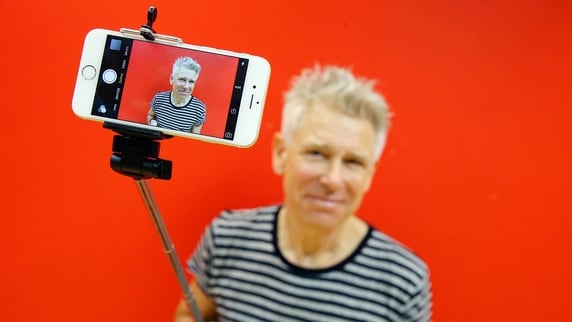
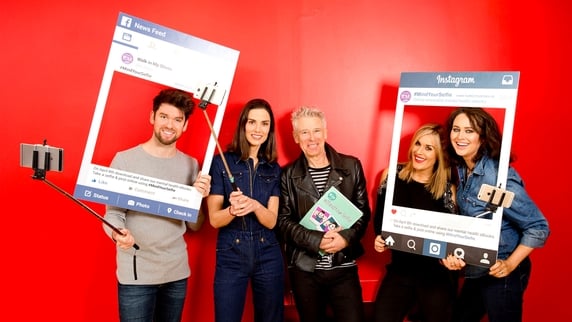
Dublin, 5th April 2016; U2’s Adam Clayton, along with almost 30 of Ireland’s A-List bloggers and celebrities, will be sharing their selfies on Friday 8th April to launch #MindYourSelfie, an exciting new information campaign by Walk In My Shoes.

Adam Clayton talks about alcohol and his own  mental health struggles

"I've got it wrong at times in my life and relied on alcohol to get me through something."
U2 bassist Adam Clayton has spoken about the moment he realised he needed help in his struggle with his emotional wellbeing, telling Eoghan McDermott on 2fm, "I was fed up of being fed up."

Clayton's struggles with his alcohol use have been well documented, and he spoke of the role of his friends in helping him through the roughest point in his life.

The Dubliner is looking to demystify the stigma around mental health problems, and spoke to McDermott about Friday's #MindYourSelfie campaign on Twitter.


Adam Clayton at the #MindYourSelfie launch with (L-R) 2fm's Eoghan McDermott, model Alison Canavan, broadcaster Rebecca Horan and model Corina Grant
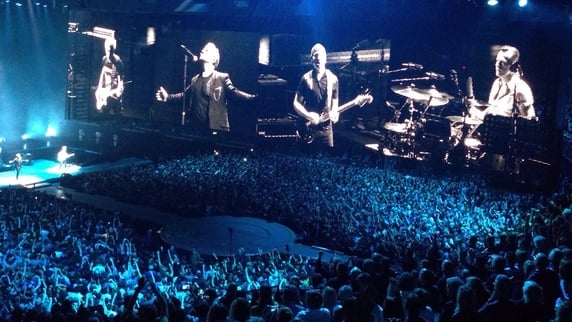
Clayton also discussed U2's four homecoming shows last November at the 3Arena. "It was really great to be able to play that show, in Dublin, indoors again, because we hadn't played Dublin indoors since the last Point show that we did way back when at the end of '89, really. And it was a real Dublin crowd. It was a real home crowd," he said.


"The first night, I think, we were kind of wandering around bumping into things because it was unfamiliar. But by the fourth night we were pretty comfortable."

When asked if his attention ever wandered while playing any of U2's classic tracks, Clayton replied that the songs were part of him.

"They're a little bit like an old, comfortable pair of shoes," he explained. "You've been amazing places in them. They've maybe seen better days but you know them inside out. Those songs, they mean so much to the people that come to the shows [that] it's kind of an amazing gift to have one of those songs and be able to perform it to people." 

For more on the campaign, see walkinmyshoes.ie or #mindyourselfie.  

http://www.rte.ie/http://www.joe.ie/

Monday, March 28, 2016

Bono Speaks Out on Solving the Refugee Crisis


U2 frontman Bono is using his spotlight to shine a light on the plight of refugees, calling the refugee crisis a "global problem."

"We now know that what goes on in the Middle East or North Africa this year will spill onto the streets of Paris or Brussels next year and, God forbid, onto the streets of America," Bono said today on "Good Morning America," referring to the recent terrorist attacks in Brussels and Paris.

"We cannot separate ourselves from what’s going on in the outside world anymore. It’s our world. That’s what comes with globalization," he said. "With global impact, we’ve got responsibilities."

The 55-year-old rocker spoke to "GMA" from the Zaatari refugee camp in Jordan, home to approximately 80,000 refugees, mostly from Syria.
"The government here has told us they think one-quarter of their population are refugees," Bono said of Jordan. "Their generosity is right at its elastic limit."

"We need to get behind them and countries like them that are looking after us and trying to represent our values and I think that’s very important for Americans to hear that they have an ally in Jordan," he said.

Bono said the refugee crisis's explosion in growth means that all countries and citizens, "need to get more on top of it."

"This was a problem that was just a few years ago, 10,000 people a day were forcefully displaced from their homes," he said. "At the moment it’s 40,000 people per day displaced from their homes."

Bono is working with the One campaign he co-founded to activate the group's seven million members to help and encourage others to act.

The musician has taken to Instagram to document his experiences meeting with refugees. Bono and his U2 bandmates have also highlighted the crisis while on tour, showing footage of refugees on concert screens.

The band's message is that if a solution is not found for the refugee crisis, Europe will be no more.

"If what happened in Syria were, God forbid, to happen again to another country, it’s happening already in Libya but, God forbid, Nigeria, Europe is no longer viable," Bono said. "That’s a big problem for America."

"As well as being a big trade partner, Europe is America’s greatest ally," he continued. "Jordan, where I’m standing, is a really critical ally of America and, as it happens, a lesson of grace in the way they’re treating the refugee crisis."

As Bono spoke at the refugee camp, children could be seen running and playing behind him.

"Remember, all these kids, all these lives, they want to be friends of America. They want to be friends of liberty," Bono said. "These places can be sort of universities in teaching people our values or else they can be places that are dangerous to our ideas and who we are so let’s take the first course, not the second."

http://abcnews.go.com/

Thursday, January 28, 2016

Bono: ‘People think Aids is done – it’s not done’

Bono and Bill Gates at the World Economic Forum annual meeting in Davos to mark the 10 years of RED. Photograph: AFP/Getty Images

‘Battle against Aids is not a last decade issue. It’s going to be the next decade issue’


It’s 10 years since Bono and Bobby Shriver established RED, a fund set up to fight AIDS and other diseases in developing countries, after meeting business leaders in Davos. A decade later, the U2 star was back in the Swiss resort this week to celebrate the 10-year launch of the initiative which has raised more than $350 million for the fight against Aids. 
Speaking to The Irish Times on the fringes of the World Economic Forum, Bono said his aim this year was to continue the momentum behind the campaign. “The battle against Aids is not a last decade issue. It’s going to be the next decade issue. We need to finish the job, get new companies, new interest. It’s kind of annoying and sometimes upsetting that these global health issues can become creatures of fashion. People think Aids is done – it’s not done.” This week at Davos, Salesforce confirmed a $5 billion investment. Bono has also met with companies Weiss and Philips on Friday about potential investment. “To bring it to the next level, we need some new blood – 60 million lives have been touched by Red money – $350 million of it – we’re proud about that.” To date, more than 60 companies have collaborated with Red, including Starbucks and Apple. The charity works by licensing a brand, Product Red, to companies who then donate part of the profits generated by the sale of products sold under that brand to the fund. Bono was one of more than 2,000 individuals from the world of business, politics and social activism attending the 46th World Economic Forum. Also present was Daire Hickey, one of the co-founders of Web Summit , the tech event which controversially announced plans to move to Lisbon next year. On Tuesday, Web Summit hosted a networking event which was attended by representatives of Facebook, Microsoft, the deputy chairman of Nasdaq, and a host of media start-ups. Hickey, who attended the IDA’s dinner with Taoiseach Enda Kenny on Thursday, said that preparations were progressing well for next year’s web summit in Lisbon. “We’ve lined up some incredible speakers that we’re going to announce over the next few months. We’ve already sold more tickets than we had at this point last year for Dublin, so there’s been a huge interest.” Speaking on the final day of the World Economic Forum, which had been overshadowed by concerns about the health of the global economy and signs of slowdown in China, IMF managing director Christine Lagarde said that markets needed more “clarity and certainty” on how China was managing its currency, particularly the yuan’s relationship with the dollar. The IMF late last year announced that the renminbi – official currency of the People’s Republic of China – would be admitted into the fund’s basket of currencies. Bank of Japan Governor Haruhiko Kuroda told the forum he believed China should use capital controls to stabilise its currency. Despite this week’s sell-off in global equity markets, most analysts and senior banks at Davos played down the possibility of a major slowdown, predicting that China would experience a soft landing. But billionaire financier George Soros disagreed. Speaking on Thursday he said a hard landing was “practically unavoidable” for China. “I’m not expecting it, I’m observing it,” he said.


http://www.irishtimes.com/

Wednesday, December 16, 2015

Special Report: Countdown to Zero - Suroosh Speaks with Bono

VICE co-founder Suroosh Alvi traveled to Rwanda with U2 lead singer and (RED) co-founder Bono to explore how we have reached "the beginning of the end of AIDS" and what needs to happen next.


http://www.vice.com/

Monday, December 14, 2015

Edge Visits Belfast Center For Disabled Children

Edge, U2, Mencap

The Edge, the guitarist for band U2, took a day out of touring to visit a new facility for children with learning disabilities, Mencap, just outside of Belfast.

“I’ve been looking forward to seeing it,” Edge said of the visit. “We all need a stimulating environment, and this will provide great support.”

The Edge is a longtime supporter of the charity. He has a personal connection to Mencap since his cousin Ciara Lawrence, who has a learning disability and works for Mencap in London, asked him to become an ambassador in 2009.

Collette Stewart and her young son Harry waited to meet The Edge. She admitted to feeling nervous because she had a picture of the musician on her wall 20 years ago.

“He seems like a very genuine, kind man and seemed really interested in seeing and talking to us all,” Collette said. “I think he was a little overwhelmed. It must be quite different for him to see us lot when he’s used to bright lights.”She added that there were lots of “high-fives” with the children.
“Some people aren’t sure how to approach kids with learning disabilities, but he knew what to do,” Collette said.

During his 45-minute visit The Edge posed for photos with Mencap ambassadors and the families of children with disabilities.

After explaining that Mencap would be the official charity for the Belfast Marathon for the next three years, Collette, who also works as a Mencap ambassador, and she “teased him to see if he would consider the marathon and he said he could get the rest of the band to do the relay”.

Margaret Kelly, director of Mencap Northern Ireland, praised the musician and said, “We are incredibly grateful to him. The families were so happy to meet him.”

U2 guitarist The Edge has paid a visit to a new centre in greater Belfast which supports young people with a learning disability.

He urged people to donate to Mencap, which has been named official charity partner of Belfast City Marathon for the next three years.

“Supporting the marathon is an easy way to give back Mencap, which is particularly important at the moment, with the cost of this amazing facility,” Edge said. “On a personal level, Mencap has done so much for my cousin Ciara in helping her reach her full potential. Everyone should have access to this kind of support.”

Edge, U2, Mencap

“He has been a fantastic ambassador for Mencap and we hope his continued support inspires others to back Mencap and help make our new centre and the services we provide the best they can be for the whole of Northern Ireland,” Kelly said.

http://themusicinthedark.com/

Tuesday, December 1, 2015

Bono, George Clooney among celebs participating in all-star campaign for World AIDS Day

Bono is a launching an all-star campaign featuring “once-in-a-lifetime experiences” to coincide with World AIDS Day on Monday.


Would you like to spend quality time with George Clooney as he showers you with compliments?

How about walk a red carpet with Meryl Streep or visit the set of "Game of Thrones"?

They are all possible: Bono is a launching an all-star campaign featuring "once-in-a-lifetime experiences" that can be won after donating at least $10 to his organization (RED), which raises funds to fight AIDS.


red
The campaign kicks off Tuesday to coincide with World AIDS Day, which is Dec. 1.

And Bono isn't just the face for the movement: The U2 frontman will go on a bike ride with one donor - a year after he was seriously injured in a bike accident in New York's Central Park that forced him into surgery.

"I'm not sure that was as funny to my band as it was to me," Bono said in an interview with The Associated Press.

"But I think we're going to have fun and yeah, we'll go visit the scene of the crime."

Jimmy Kimmel is dedicating his Tuesday late-night show to the campaign. He and Olivia Wilde will host (SHOPATHON), a tongue-in-check play off of home shopping, and the special episode will feature celebrity guests like Tom Brady, who is offering one donor a chance to learn how to pass a football, and Shaquille O'Neal, who will take a photo with a winner for his or her 2016 holiday card.


And Kimmel is offering himself up, too: He is willing to give someone's kid "the talk."

"There's no age limit - if you have a 45-year-old kid, I'll explain it to him, too, as long as the parents are OK with it. I'm happy to do the job," said Kimmel, who appears in a promo video for the campaign with Scarlett Johansson and Barry Manilow.

Other "experiences" that can be earned after donating on Omaze.com/RED include a contour makeover with Kim Kardashian; a portrait painting by James Franco; or attending a University of Texas at Austin football game with alum Matthew McConaughey. Entries close on January 21, 2016.

"Even though red is the color of emergency, there's a sort of optimism about the whole campaign and a kind of defiant humor. We have always had that, but the (SHOPATHON) will really take it to another new level," Bono said.

The Bill and Melinda Gates Foundation will match every dollar raised up to $20 million. R&B singer The Weeknd is offering fans a chance to hang backstage at a concert; there is a one-day "wellness break" with Snoop Dogg in Colorado; and Ryan Seacrest will let someone announce the No. 1 song on his radio show.

"When you see how much work Bono does personally to fight AIDS, it's almost embarrassing, it's the least we can do or anyone can do to help," Kimmel said.

"Also, it's Christmas season, you have to figure out what to buy. It's almost like my Oprah's favorite things list," he added.

Bono won't appear on the special episode of "Jimmy Kimmel Live!," which airs on ABC and tapes in Hollywood. Instead, he will be in New York celebrating the 10-year anniversary of (RED) at Carnegie Hall with Vice President Joe Biden, the Edge, Stephen Colbert, Miley Cyrus, Trevor Noah and others.

"It's a big day, World AIDS Days. It's crucial this year. This is the most crucial year," Bono said.

"We can feel people going, 'Oh yeah, that AIDS thing is done now,' and we're like, 'No! It's not!'"

bono,u2 Banner
http://www.one.org
https://red.org/

Thursday, November 12, 2015

Adam Clayton against Racism

U2 bassist Adam Clayton joines the ProAsyl campaign "Bassists Against Racists" and speaks out against racism.


We are tired of the apparently endless rabble-rousing against asylum seekers, foreigners in general, people with a different skin color, etc. So we say STOP! With the Pro Asyl Campaign "Guitarists & Bassists against Racists" (https://www.facebook.com/proasyl) we would like to wake up, but we also want to send a signal to all musicians, to actively support this campaign, as some media allready did.


Framus & Warwick support Pro Asyl with their new T-shirt campaign. The complete profit of 2.00 EUR per T-shirt will be donated directly to Pro Asyl. 


http://www.warwick.de/

Tuesday, October 20, 2015

Bono: a marketing genius and the world’s greatest popular communicator

Bono’s (RED) has raised $300m the Global Fund to Fight AIDS, Tuberculosis and Malaria. Its mix of celebrities and corporations redefined corporate social responsibility.


As U2 prepare for their first indoor tour for a decade, and the first live action since Bono’s serious bike accident in New York a year ago, is it time to finally recognise the Dublin-born front man as one of the world’s great campaigners?

It could be argued that the Product (RED) campaign, launched in 2006, is one of only a dozen or so marketing campaigns that have genuinely “shaken the world” over the past four decades. Indeed Team Bono, which includes PR adviser Matthew Freud, displays most of the core characteristics of any great modern campaign.

To date (RED), founded by Bono and the US philanthropist Bobby Shriver, has raised more than $300 million for The Global Fund to Fight AIDS, Tuberculosis and Malaria. Moreover, the intriguing mix of celebrities and corporations in ambitious coalition has created a new model for corporate social responsibility (CSR) campaigns.

Prior to the creation of (RED), the vast majority of the money contributed to The Global Fund – set up as a public-private partnership in 2002 – had come from governments such as the US, Britain, France and Germany. The great achievement of (RED) was to bring corporates and brands fully into the war against these devastating diseases, particularly in Africa, both in terms of funding and public awareness.

The campaign is best known for Bono’s ability to galvanise A-list celebrities and politicians worldwide – from Oprah Winfrey and Kate Moss to Desmond Tutu – to contribute their time and image rights to raising public awareness of these issues. However, (RED) is truly groundbreaking because it provides a solution to the tricky conundrum of matching corporate capitalism with civic causes via the charity sector. Freud explains this in typically colourful terms: “(RED) invented a condom that allowed safe sex between companies and charities; a completely transparent relationship between product purchase and charity donation to a particular cause”.

(RED) encourages consumers to buy certain products on the basis that a percentage of their purchase fee would go directly to a specified good cause. The mechanics are upfront and honest and the charity delivery process is set up to be transparent and first class. It was this complex coalition between brands, celebrities, politicians and consumers that has changed the thinking of marketing departments around the globe, both within corporations and NGOs.
(RED) is actually a culmination of a 20-year movement that Microsoft founder Bill Gates coined “conscious consumerism” and whose corporate incarnation can be described as “cause marketing”. Of course, Bono participated in the seminal Band Aid charity single back in 1984, and U2 were central to the Live Aid event the following year. Two decades later it was Bono’s vision, open-mindedness and relentless energy – alongside that of (RED)’s co-founder the attorney and journalist Bobby Shriver – that came up with a consumer marketing solution for this movement.

Between them Bono, U2 and Freud demonstrate the key elements of successful modern campaigns. The first of these – authenticity, clarity of vision and purpose – were apparent from the start.

Despite Bono’s huge wealth and array of business interests, those close to him say that his campaigning around global health remains second only to U2 in his list of personal priorities. Freud describes him as “one of the great global marketeers and the world’s greatest popular communicator”.

“Two pills: magical, astonishing pills, they cost 40 cents and if you have HIV, they will keep you alive,” said Bono in early 2005. “I remember going to Lilongwe, Malawi where there were up to four people to a bed, waiting to be diagnosed… but the diagnosis was basically a death sentence because there was no treatment available; drugs that you could get in any pharmacy in Europe or America. It was an assault on the whole idea of equality, that where you live can decide whether you live or whether you die.” Bono was already working with Aids activists from Africa, and was clearly hell-bent on using his celebrity as currency to get people in Europe and America to take action.

But when it came to the next key element – the strategic creation of a marketing “movement” – Freud’s input was crucial. Indeed during one live performance, when Freud was in the audience, Bono thanked his valued PR man in front of tens of thousands of envious fans. Bono explains: “Matthew’s company not only specialised in corporate PR but his connections and history with Comic Relief and Make Poverty History put him and Freuds in a unique position to understand the complexities around launching a pro-social brand like (RED) in the UK market.”

The final vital element of any great campaign is the presence of big powerful ideas, executed with creativity. And in a masterstroke in 2007, Freud arranged for Bono to guest-edit the Independent newspaper. The cover, designed by Damien Hirst, simply said “NO NEWS TODAY*” and in very small letters at the bottom “*Just 6,500 Africans died today as a result of a preventable, treatable disease”. Based on this success, and Mark Dowley’s introduction to Vanity Fair editor, Graydon Carter, the following year Bono guest-edited the June issue of Vanity Fair, branded “The Africa Issue” and with 20 different covers, photographed by Annie Leibovitz. It featured celebrities dedicated to issues in Africa including Barack Obama, Muhammad Ali and Desmond Tutu. Several such guest-edited issues of newspapers and magazines around the world followed.

Subsequently a raft of new corporate partners signed up. Apple alone now sells half a dozen (RED) products and has contributed more than $100million via the campaign. And this is not to mention American Express, Gap, Armani and Converse.
Strangely, despite their huge fan base and enduring sales, Bono and U2 continue to divide opinion around the world. Overblown, ubiquitous and arrogant are adjectives often attached.

Perhaps it will still take a few decades for Bono’s campaigning work to be fully appreciated and Product (RED) recognised as having truly broken the mould.


Danny Rogers’ new book Campaigns that Shook the World: The Evolution of Public Relations (Kogan Page) is out now


http://www.irishtimes.com/
http://www.red.org/

Wednesday, September 23, 2015

Bono's Blog: Solar Fields, Sexist Poverty and a Modern Marshall Plan

Poverty is sexist: it hits women and girls the hardest, which is doubly ironic, because investing in them is the best way to end poverty


If you are allergic to fanfare you’d better bolt your doors and shutter your windows on September 25, because there is going to be a lot of it that day in the vicinity of the United Nations, when world leaders ratify the Global Goals for Sustainable Development. This is a genuinely big deal, of large consequence — let’s hope — especially for the poorest people on the planet, but you will be forgiven if some of you are rolling your eyes, or yawning, or worse.

At a time when Europe and the rest of the world are flailing in response to the massive refugee crisis in the Middle East, this hardly seems a time for grand commitments of any kind, unless it’s a commitment to stop stumbling over our own two feet.

It’s a fair and pressing question. If we can’t handle what’s happening in Syria — if we can’t even get the nomenclature right, insisting on calling these desperate refugees “migrants,” as if they had just packed their suitcases and moved north for a change of scene — how can we possibly handle the more chronic, endemic humanitarian crises of extreme poverty and hunger and sickness? Who, exactly, do we think we are, launching another fanciful campaign?

But pause for a second before you projectile vomit, and consider that the emergency in Syria shows exactly why we need to pursue — and achieve — these Global Goals. The evidence of that is all over the Sahel, the band across the north of Africa, where three extremes — extreme poverty, extreme climate, extreme ideology — pose a stark and constant threat. A failure to make progress there could trigger a series of crises that would dwarf what we’re seeing in Syria.
Boko Haram, in northern Nigeria, is well known now in the rest of the world, by virtue of its being horrific and violent, but it’s hardly the only group of extremists that’s active in the Sahel; Al Shabaab, The Lord’s Resistance Army, and Al Qaeda in the Maghreb are as well. CIA analysts — who are not, as a rule, dewy-eyed development types — have looked at northern Nigeria and said that the best way to stop the militants in the long run is to end extreme poverty in the area and create a better, more inclusive education system, one that Muslims feel they have some stake in. When the CIA and anti-poverty activists agree, things must be very right or very wrong!
Especially when the demographers join in. By 2050, we’re told, Africa will have 2.5 billion people, twice the population of China, and more than one third of the youth on earth will be African. Which is exciting news for all of us who find Africa, hands down, one of the world’s most energizing places. But hundreds of millions of unemployed or underemployed young men, if it comes to that, is not a recipe for stability — either there or here, wherever “here” is for you.

Of course the Global Goals are just that: goals, aspirations. Not blueprints or battle plans. As Amina Mohammed, the very impressive Nigerian Assistant Secretary General to the UN who’s shepherding the goals, would surely agree, they’re the what, not the how. So what’s the how?

It’s going to have to be a lot of things, of course. But one of them, a big one, might be an idea we’re hearing from African leaders in business, civil society, and government: a modern Marshall Plan, inspired if not actually based on what America did in Europe after World War II. According to Akin Adesina, the new President of the African Development Bank:

“The future of feeding a projected 9 billion people in the world by 2050 depends on Africa, which has 65% of all arable land left. Africa cannot eat potential. To seize this potential requires a scaled global partnership, a modern day Marshall plan, but led by Africa.”
Similarly, “A comprehensive, coordinated approach” is what Tony Elumelu, the Nigerian entrepreneur and philanthropist, has called for, a plan for trade, transparency, employment, infrastructure — all the elements of opportunity.

But what would a Marshall Plan even look like these days? Not exactly like Secretary of State (and General) George C. Marshall’s Plan, which was brilliantly suited to its own time, less so our own. The Second World War left not only cities but entire economies in rubble; the Marshall Plan helped them rebuild. A modern Marshall Plan would, by contrast, have to focus on countries that were not industrialised to begin with, but are working hard to build the foundations.

To succeed, it would have to employ a bunch of means all at once — ganging up on the problems of extreme poverty and unequal opportunity. Aid is one of those means — an essential one. Our ultimate goal is the end of aid — growing economies, shared prosperity, self-sufficiency. But the way we’re going to get there — if you can handle the cognitive dissonance — is actually to increase the aid, for now, to the countries that need it the most. The poorest countries get only a small share, 30 percent, of the aid that the world provides. Investing foreign funds can leverage domestic funds to improve basic health services and education for the poorest citizens, especially women and girls.

Poverty is sexist: it hits women and girls the hardest, which is doubly ironic, because investing in them is the best way to end poverty.

People have gotten smarter since the 1940s — smarter even since the early 2000s — in making sure that aid budgets get spent on what works and get results. A generation of techno-minded “factivists” are on the march, fighting corruption, campaigning for connectivity — and the access to information and opportunities it provides — and keenly aware that if they can mobilise their own domestic resources, soon they will no longer need the wealth of their partners to unlock prosperity in their own neighbourhood.

A 21st-century Marshall Plan would also have to get some private-sector skin in the game, not just foreign aid. The U.S. in the 1940s gave loans to struggling businesses, which is still a good idea, but this doesn’t just have to come from governments; there are successful companies across Africa and around the world that could be making investments in the ones that need capital. The private sector has got as much to gain as anyone from helping lagging industries to flourish, growing businesses to grow further, and developing economies to become developed ones. And the private sector, in many ways, has more leverage than multilateral aid agencies in making that happen. It’s got even more leverage when it works in concert with those aid agencies and with national and local governments.

I saw this last month just outside Kigali, in Rwanda, where a combination of government assistance, through President Obama’s Power Africa initiative, and private investment, through Gigawatt Global, has created a crazy futurist solar field that’s boosted Rwanda’s generation capacity by 6 percent and has basically blown my circuits with its possibilities; this array just has to be seen. Europe’s already on board with the idea of clean, green energy, promising to help 500 million people get access to it. The world ought to put its weight behind risk-takers like Gigawatt and help them scale in places like northern Nigeria. The sun shines there, too.

A modern George C. Marshall Plan could even draw investment from defense budgets, because military planners are starting (just starting) to think like a health insurance plan that pays for your preventative medicine instead of just waiting for you to get deathly ill. The military does love its machines, but it would rather not put its human beings into places where they are likely to get shot or worse. They know the original Marshall Plan was not just a postwar plan, it was an anti-war plan — designed to stop Soviet expansionism and keep the Cold War from getting hot in Europe.

Peace and stability are of course a precondition for building anything lasting — or anything at all. There’s a reason the Marshall Plan got started only after the war — not in the middle of it. Clearly we’ve got to end the fighting in Syria before development is even a remote possibility there. But that shouldn’t — can’t — stop us from preventing the dry regions of the world, full of tinder and lit with sparks, from exploding into flames.

The Marshall Plan should be a model but it needn’t be our only inspiration. There is plenty of that in Africa itself, from the solar fields in Rwanda to tech startups in Nigeria, Kenya, and Tanzania. There are success stories virtually everywhere on the continent — the brilliant work of a rising generation of African entrepreneurs and activists and artists and officials.

Partnership, not paternalism, is required here — and was the key to the success of the previous edition of the Global Goals, the Millennium Development Goals.
It should egg us on to consider the role the MDGs played in increasing the number of children in schools and dramatically reducing child deaths, maternal mortality, and the most degrading, debilitating sort of poverty.

I’ve been fighting with the world most of my life, and I’ve learned that change mostly comes slowly and incrementally. But sometimes, when a situation demands it, we think big, act audaciously, and we get it right — or at least partly right, which is no small thing. Now needs to be one of those times. We’ve got to get it right, right now, because the humanitarian disaster in the Middle East — and the blundering toward a humane response in Europe and elsewhere — are a kick to the collective gut, a brutal reminder of what it means to get it wrong. Syria will not be the last conflagration, but when we think and build as big as our goals, we have a chance to prevent the fire next time.


https://medium.com
http://www.one.org/

Friday, August 28, 2015

Bono joins African stars in campaign to use music to empower women

Bono, second left, poses with African music stars after a press conference in Lagos, Nigeria, Friday, Aug. 28, 2015.


African stars have joined rock star Bono in a campaign to use music to help empower women globally.

Bono and the top African male musicians D'banj, Diamond and Banky W announced Friday that they will be included in a remix of the song Strong Girl, a rallying cry for women's empowerment which features top African female talent.

U2 frontman Bono, whose ONE advocacy group is the creative force behind the campaign for women empowerment, said music can create awareness and help shift policies to empower women because politicians are driven by popular things.

Sipho Moyo, Africa executive director of ONE, said the campaign hopes to create structural and policy changes globally that will ensure women are empowered. The ultimate goal is to eradicate extreme poverty in 2030, Moyo says.

http://www.cbc.ca/

Monday, March 9, 2015

ONE: 'Poverty is sexist' letter

Ali Hewson


Humanitarian and global activist Ali Hewson is part of a cohort of influential women across the world, including Meryl Streep, Beyonce, Sheryl Sandberg and Lady Gaga to back advocacy group ONE's campaign for world leaders to put girls and women centre stage in 2015.


This year, world leaders are aiming to agree new global goals to set the development agenda for a generation, and a group of the world's leading female lights have put their signatures to a powerful letter demanding change.

The letter has been written for the attention of Chancellor Angela Merkel and Chairwoman Dlamini-Zuma - who are key decision-makers this year, and are hosting conferences on the topic - and it powerfully asserts how "poverty is sexist".

The women in the campaign say girls and women must be at the heart of the fight to end extreme poverty, and explain that unlocking women's economic potential could improve the lives of everyone.

In the letter they write that change needs to come: "For the girl who can't go to a decent primary or secondary school or access healthcare; for the mothers threatened with death when they give life and who aren't allowed to decide when to have their next child; for the women who can't own or inherit the land she farms, nor open a bank account, own a phone, access electricity or the legal system; for the infant girl who doesn't legally exist because her birth wasn't registered and the government hasn't the capacity to collect data on her or her village; for the women and girls who can't take those who are violent towards them to court nor access justice - let's make sure they all count. Put simply, poverty is sexist, and we won't end it unless we face up to the fact that girls and women get a raw deal."

In June, the chancellor and chairwoman will chair key summits in Germany, and South Africa, which will be followed by the unveiling of new goals in New York in September.

Read the whole text here.
Sign the petition here.


Join the ONE Campaign


http://www.independent.ie/

Friday, January 30, 2015

Bono's daughter Jordan Hewson steps into the limelight - as a journalist

Bono and daughter Jordan Hewson


Bono's daughter Jordan Hewson is following in her father's footsteps in the international fight against poverty.

The 25-year-old graduate of New York University has this week been unveiled as the online editor of Global Citizen, an organisation aiming to eradicate extreme poverty.

Jordan has largely avoided life in the limelight, while her younger sister Eve has pursued a career in acting, she is slowly entering public life to highlight the cause championed by her famous father.

Eve Hewson (L) and Jordan Hewson attend VIP Lounge at the 2014 Global Citizen Festival to end extreme poverty by 2030 in Central Park
Jordan and Eve Hewson  at 2014 Global Citizen Festival

"We're really working against the injustice of extreme poverty," she told Arianna Huffington of the Huffington Post.

"It's rarely a privilege we know how to access easily," she said.

After the Global Citizen Festival, a concert headlined by Jay-Z and No Doubt  in September of last year, the cause was given a new high profile platform.


http://www.independent.ie/