Showing posts with label Activism. Show all posts

Tuesday, October 8, 2019

La imagen puede contener: 6 personas, personas sonriendo


Bono appears on the second episode of Hozier’s “Cry Power” podcast.Hozier  has created  this podcast in collaboration with Global Citizen. The podcast series will see Hozier speak with musicians, artists, writers, campaigners about how to take action and change the world.


www.globalcitizen.org
https://hozier.com/cry-power-podcast/

Wednesday, October 10, 2018

Bono at the European Parliament

Bono in Brussels: the U2 singer with Antonio Tajani of the European Parliament. Photograph: François Lenoir/Reuters


Bono has called on artists to celebrate the “romance” of Europe at a time when the value of the EU has come under question.

Visiting the European Parliament in Brussels, the U2 singer hailed the European institutions as both a “brain that is strategically working to improve the lives of Europeans, so we do largely live better lives than anyone else in the world”, and a “loudly beating heart”. “I’m not sure it is heard by enough people, and I want to be a part of that romantic idea that is Europe,” he added.

The Irish rock star and anti-poverty campaigner did not mention Brexit in his comments alongside the parliament’s president, Antonio Tajani, but said that pro-European voices were needed at a time when “people are questioning Europe”. 

“As an artist I think I probably have a role to play in romancing the idea of Europe and seeing it as something warm-blooded,” said Bono. “Europe is a thought that needs to become a feeling, and I am, as an artist, in service of that.”

La imagen puede contener: 2 personas, personas sonriendo, personas de pie y traje
Describing himself as “European as well as Irish”, Bono suggested that Europe had lost out from the lack of the kind of positive artistic treatment given to the United States in movies and songs. 

“If you think about the mythology of America and you think about Hollywood and how Hollywood perpetuated the idea of the American dream... when you think about artists involved in the project that is Europe, it’s not that many,” he said. “I think we need more as people are questioning Europe.”

Tajani thanked the singer for his engagement in the European project, adding: “If we want to protect our citizens we need the European umbrella. It’s impossible to compete during globalisation as Italy, as France, as Ireland, as Germany, with China, Russia, India or the USA. We need to be united all together as friends with a common history, a common identity and common values – first of all, freedom.”

La imagen puede contener: una o varias personas y lentes de sol
Bono was in Brussels for talks about improving the partnership between Europe and Africa, which he characterised as “an incredible opportunity”. “While America is on its holidays from big ideas, we should sit across the table with our African partners as equals and take over the world,” he said. – PA


https://www.irishtimes.com

Monday, September 24, 2018

Adam Clayton Says It's Time to Act Against Gun Deaths in America


Adam Clayton from U2 can't perform at Concert Across America to End Gun Violence this year but he sent this important message about preventing gun deaths in America and mobilizing with music. Learn more about #ConcertAcrossAmerica at http://concertacrossamerica.org. @u2 

Wednesday, September 19, 2018

Bono meets Pope Francis


Bono meets Pope Francis

Bono was at the Vatican Wednesday for a private meeting with Pope Francis. 
According to the Catholic News Agency, the private visit lasted a little more than 30 minutes 
and the two talked about topics ranging from commerce and development to the sexual abuse scandal:
Irishman Bono, born Paul David Hewson, also said that having just come from Ireland, they "inevitably" 
spoke about "the pope's feelings about what has happened in the Church."
He said he explained to Francis that to some it looks like "the abusers are being more 
protected than the victims," and that he "could see the pain" in the pope's face. 
"I felt he was sincere, and I think he's an extraordinary man for extraordinary times," Bono said.

Bono also signed an agreement on behalf of the ONE Campaign to work with Scholas Occurentes, 
an educational foundation supported by Pope Francis. "We haven't figured out what we are going to do
 together," Bono said, "but we sort of have a crush on each other" -- that quote is 
The Vatican has posted this brief video with highlights from Bono's visit with Pope Francis.


www.atu2.com 

Tuesday, April 24, 2018

Bono Awarded George W. Bush Medal for Distinguished Leadership for AIDS Work


Bono was awarded the inaugural George W. Bush Medal for Distinguished Leadership Thursday, with the former president honoring the U2 singer for his work in combatting the HIV/AIDS crisis and poverty in Africa.

In 2002, during a visit to the White House, Bono lobbied the president to lend financial support to a series to humanitarian organizations that would provide financial assistance and help stem the AIDS crisis in poor countries.
"It's a huge honor to [win] this award, and I'm here to honor your leadership on the greatest health intervention in the history of medicine," Bono told Bush Thursday in a conversation that was live-streamed from the George W. Bush Presidential Center in Dallas.

"That's what I'm not sure people understand: 13 million from PEPFAR [President's Emergency Plan for AIDS Relief], and if you add the Global Relief Fund, it's probably been 21 million lives have been saved by this work that you began and led and I'm here to honor that."

Bush responded, "The truth of the matter is, [PEPFAR] never would have made it out of Congress had you not been engaged. The first time I met you, you knew more statistics, like you were coming right out of the CIA."

Bush added, "Here's the thing about Bono that people got to understand: I like to say he's a real deal. This is a guy who has got a huge heart, obviously a talent, but cares so much about the human condition that he spends an enormous amount of time and capital on saving lives."

Bono also praised the ONE campaign and the American taxpayers for their help. However, the singer expressed concern about whether the Trump White House will continue the fight.

"Tackling a virus like this, if you're not as fast or faster than the virus, it's outrunning you. So all the progress that we made over the years can be undone," Bono warned.

"This was a moonshot, and [Bush] started something that was kind of 'put America on the Moon' in this regard, and I feel like we're just about to land on the Moon, and right now with this administration, we have some problems because they're talking about turning back. And I think we've got to be very hardheaded but making the argument for saving lives. It would be a very un-American thing to get all the way to the Moon and not put an American flag on it."

Bono joked that he was worried he would be fired from U2 over the honor, since his band mates were in Montreal rehearsing for their upcoming tour while the singer was accepting awards from the former president. "I kind of snuck out the back window," Bono told Bush. The singer also expressed his condolences to the Bush family following the death of Barbara Bush earlier this week.


www.rollingstone.com

Tuesday, April 17, 2018

Bono talks Texas, why he's saluting George W. Bush and the foreign aid argument we're missing


Over the last two decades, Bono has become known almost in equal measure as the frontman of U2, one of the most successful rock bands of all time, and for his humanitarian efforts. It’s for the latter that he’s set to receive the George W. Bush Medal For Distinguished Leadership.

Ahead of his trip to Dallas to receive the award, he talked with The Dallas Morning News. The interview has been edited for length and clarity.


What does good leadership look like to you? What does it mean to be a good leader?

Off the top of my head, I've always thought you're as good as the arguments you get, really. That's probably why I'm in a band and why I'm still married. [Chuckles.] I'm not just in U2. I'm in a lot of band.

I see the One campaign as a band. I see (Red) as a band. I've just started this impact fund called Rise — that's kind of a band with [co-founders Jeff Skoll and Bill McGlashan]. I just always want to be around the right arguments, I suppose, and having people who are smarter than me around. That's just what I've tried to do. And to listen. I'm a talker — sometimes I talk to try and understand subjects, but actually listening. Especially in development work, in any work, but in development work it's critical.

President [Lyndon B.] Johnson was from Texas, right?

Oh yeah, he's a big Texas guy.

Was he the one who said, “If you're talking, you're not learning?”

I'll have to look that up, but it sounds like something he would've said.

Yeah, [imitates Johnson's voice] “You're not learnin' anything if you're talking!”

I was hoping you could talk to me about your approach to activism and humanitarianism and how it's evolved over the years. I'm curious about the differences in strategy between the (Red) campaign and the One campaign.

I always saw (Red) as the sort of gateway drug to the kind of activism that the One campaign does. You know, I think it was [former Senator from Tennessee] Bill Frist ... he's a physician, and he was saying to me, if you want to make this stuff relevant to politicians, then you're going to have to bring it back to the pig roast, bring it back to the people where they live — not just the Capitol. Not just to the media. That was really where (Red) began.

We look at Bank of America and their support of (Red). It's critical in terms of their cash contributions in saving lives, but the amount of neon, of — let's call it, yeah, the neon, the amount of signage in all their branches ... You can't move without seeing the statistics about what America is doing and reminding people that it's a political imperative, using the creativity of corporate America. The creative departments of corporate America — the advertising, the marketing people, we needed particularly in the fight against HIV/AIDS, we needed everybody onboard.

Apple is our most generous contributor. Strange enough, they're most quiet in terms of the neon because they're all very modest. I'm always saying to [Apple CEO Tim Cook], please take a bow here, because we've got to half a billion dollars with (Red) and Apple deserves to take some applause. But also, we need you to make more noise, because as we're discovering, there can be some compassion fatigue.


And we've got budget cuts being pushed by this administration that would decimate not just lives, but all the work we've done. If I can remember it's over 20 million lives would be lost over the next 15 years or so. It's like getting three-quarters of the way to the moon and turning back — it's this great moonshot by America, and it is so close. I think it's the greatest single health intervention in the history of medicine, fighting a single disease and these cuts threaten to destroy it. We need heat to keep the pressure up ...

The government money is obviously doing the heavy lifting. The Global Fund and the stuff that (Red) brings in is really important, but the big numbers [are from government]. That’s why I'm coming to salute President [George W. Bush, whose administration started the President’s Emergency Plan for AIDS Relief, or PEPFAR]. Because in this, the U.S. leads the world, and he brought us there. There were a lot of people encouraging him to do it, I was one of them — it took all kinds of we sort of punk rockers and priests, we of all kinds, gathered in that movement. But he had to show leadership there. And he really did.

With proposed cuts to PEPFAR funding, there's this sense now — and getting back to what you were saying about Bill Frist — how do you bring this back to American taxpayers?  


We're really grateful for the United States for the role that you play in the world, in terms of defense. But if you ask the military men and women, they will tell you that [foreign aid, like PEPFAR] is defense. I went into the Oval office to visit President Bush and I had three pills in my hand and I said, 'Paint them red, white and blue, Mr. President, because these [life-saving medications] are the best advertisements for the United States.' And he laughed.


But actually it's turned out to be true. People love President Bush all over Africa and this is a continent that will be the most powerful player. This demographic bulge will either turn out to be a dividend or a very big problem. For Europe, for the world. I think it's going to be a very great dividend. In fashion, and music and business, I really believe in Africa. But whatever you think about Africa, it is critical that we are with these new African countries that are trying to tackle corruption and put their people first. We need them to succeed.


So, development, alongside diplomacy and defense, I think, was an early Bush doctrine. Whatever you feel about the war in Iraq, [the HIV/AIDs fight] is a monumental achievement by the people of the United States. It is akin, honestly, to the heroism of Omaha Beach or the intervention in the Second World War. I think off the top of my head, it's something like 23 million lives saved through PEPFAR [and the Global Fund] — and think about that!  That is a moonshot, and the only thing I'm sad about is that I don't think Americans know that they've done this. Americans are great at beating yourselves up about stuff, but actually you're really getting this right!

Unless there's a pratfall now, Congress — Republican and Democratic heroes in the House and the Senate — people like [Fort Worth Rep.] Kay Granger, there in Texas, they are not letting this administration screw this up. But I think the best way to ensure that it's not screwed up is if the American people take a bow, and say, wow, we really got this right. That’s why I'm coming to the Bush Center: I feel that I have a duty to report back on what's been achieved, a hell of a lot — a heaven of a lot.


You've obviously done a lot of development work over the last 15, 20 years in Africa and it's not a monolith, obviously, but is there one thing you've learned doing work there that you wish you could go back and tell yourself at the outset, when you were starting out with (Red)?


A Senegalese man in a meeting, he very gently introduced me to a proverb, which was: “If you want to cut a man's hair, be sure he's in the room.” And I felt, you know, gently scolded. We’ve got to watch with this. A messianic complex is a great thing for the lead singer of a rock band, but it doesn't work in development. You have to listen and listen again, you've got to learn from communities what they want.


What year do you think that was?


Probably early — like 2001, 2002, around that time. The One organization has 3 million members in Africa. I think we should've been called a Half, really up until that moment. Though we've had some brutish behavior down there from the leadership that went wrong in the South Africa office, but I'm still sure that we are right to be investing in our African leadership, and I think their voices will drown out ours pretty soon. It's up to 9 million members [total]. Hopefully we can be wind at the back of people who make courageous decisions in Congress, but also we can listen better and learn. We're mostly deployed on the continent of Africa, but I think it's a very exciting place and the best navigation is by Africans. Not by Irish singers.

I wanted to ask you specifically about working with George W. Bush. On its face, that could be an odd pairing, but your goals have sort of aligned over the years. Do you remember the first time you met him and was there anything where you sort of thought, "Huh, really did not see that coming," in interacting with him?


In terms of our bases, our relationship didn't look well on either of us. [Laughs.] I don't think he had much interest in meeting me — and why should he? You know, he'd just taken the Oval Office and he was a busy guy.

The first thing we did together was something that became known as the Millennium Challenge Corp. It was a new approach to development, it was if a country was tackling corruption and could prove the fiduciary quality of a particular investment, whether it be infrastructure, like roads or something, then the United States would invest. And it was a sort of pro-growth strategy and it was — it's not written about a lot. The Millennium Challenge Corp. — it's really innovative, and I think that other leaders are now looking at that in dealing with the problem that we're having now with un-managed migration in Europe. Leaders are seeing the need to invest in African success stories, and so this concept of partnering with people who are ready to be clear and transparent and have a really good plan and strategy, to back that — that was the first thing we did together. It was very practical.

I suppose the thing that surprised me was his sense of humor. It's not new to Texans. I wasn't expecting to belly laugh with this president. I remember riding in his motorcade with him and people were waving, and I said, "Oh, Mr. President, you're very popular, clearly," and he just goes, totally deadpan, "When I first came here, the people used to wave at me with one finger," and that made me laugh. I get it. You know, I might've been one of them.

In my teens even, I'm a protester by nature, and the undoing of my black-and-white view of things as a young man, were things like when people just didn't behave as the caricatures I had been told they were. I just had a lot of surprises. People whom I thought would be total [jerks] turned out to have a humanity and people I thought would be very inspirational let me down.

I started to be suspicious of clear political lines. I came from the left, that's where I grew up on the left, but I would consider myself, I'm interested in the radical center, which is just problem-solving. When it came to working with the world's poorest, the cartooning of people on the right as being totally unconcerned with what the Bible calls the least of these — I think we're misunderstanding the American people and we're misunderstanding conservatives. People laughed openly when we arrived on Capitol Hill to talk about a historic AIDS initiative with a Republican administration. People laughed at us — they really did — they got it wrong. And they underestimated this president.

I think that sort of pragmatism is interesting, especially in the social enterprise space, where you’re saying, hey, this is an opportunity to invest, do some good and if you're investing in infrastructure, make some money — it doesn't have to be either/or all the time.

Well, it's tricky. We’re trying to get rid of what's called tied aid, which is you buy our products and we will help, will feed your starving people. I don't think it should be so binary. I do think it's OK to see Africa — and Africans demand this — as a place to do commerce. And I can tell you that the rise of China did a hell of a lot for Europe and America in buying American products. I remember asking [German Chancellor Angela] Merkel, where would the German economy be without the rise of China?


When I'm speaking in the U.K. with people who are suspicious of development assistance and suggesting that we should take these small percentages and keep them for our own problems, I always try to remind them that this is their next door neighbor continent, and their problems will become yours if you're not careful. Also, there's an enormous opportunity here for your financial services, for your engineering, for your manufacturing sector.

We've got to stop seeing this through the old lens, which is very patronizing. You're investing in lives and those lives are important to you. They're important to America, for compassion reasons and also commercial reasons. If I'd heard myself say that in my 20s I might've thrown up, but I'll tell you who wouldn't throw up is my African friends. They see the dignity of trade as a way of making a relationship that was vertical into a horizontal one.


If I could switch it up real quickly, do you have a favorite thing to do in Dallas or in Texas more broadly?


It's funny because for a musician, you think of Austin, Texas, and I think of Willie Nelson. I think of more romantic pursuits like music, but the last time I was out with the Bushes, I went out into the landscape, and I really enjoyed that. I really enjoyed the country life. My missus would slap me around the head for saying that because she's been trying to get me to do more hiking and that kind of thing. But I would like to spend time on trails and I'd like to ride. The Joshua Tree Tour was great, and we played Dallas. That was pretty special.

I enjoyed the president's paintings when I was out there. That made an impression on me, too.


They're something else, huh?


I don't think there could be a more alchemical bond between the subjects and the paint in the hand of this painter. I found some of them quite overwhelming. I loved the attempt to portray these [veterans] as ordinary lives, with the sort of clear fact that they're actually extraordinary lives just under the surface. I liked that. Where do you think I should go? Tell me.


I like Deep Ellum. But that might be crazy on weekend nights. Fort Worth is nice, too. The president probably has better recommendations.


In Fort Worth they have a [painting by Mark] Rothko. And I know that Sean Scully, who's a sort of Anglo Irish giant in painting, I'm pretty sure he's in one of the great museums there. I've got to go to South By Southwest. I've never been, I'm embarrassed.


Jill Cowan,Jill Cowan, Economy Writer

www.dallasnews.com

Tuesday, November 1, 2016

Bono Just Became Glamour's First Man of the Year

From Left: Sue Lowe, Alicia Lowe, A’Driane Nieves, Jane Maynard, Bono, Diana Lamon, Mazelle Etessami, and Carrie Cohen   PHOTO: SAM JONES

“He’s one of the most outspoken and effective advocates for women and girls I know.… As an activist, he’s using those skills to get the world talking about the fact that ending extreme poverty begins with empowering women and girls.” —Melinda Gates, philanthropist and 2013 Woman of the Year

When humanitarian and rock icon Bono learned that he was being honored by Glamour as the first-ever Man of the Year, he called his wife of 34 years, Ali Hewson, to give her the news. “I asked did she think I deserved it. She wasn’t sure,” Bono tells me with a laugh. “She said I’ve work to do!”

U2’s front man has no doubts. “I’m sure I don’t deserve it,” he says. “But I’m grateful for this award as a chance to say the battle for gender equality can’t be won unless men lead it along with women. We’re largely responsible for the problem, so we have to be involved in the solutions.”

“He’s one of the most outspoken and effective advocates for women and girls I know.… As an activist, he’s using those skills to get the world talking about the fact that ending extreme poverty begins with empowering women and girls.” —Melinda Gates, philanthropist and 2013 Woman of the Year

When humanitarian and rock icon Bono learned that he was being honored by Glamour as the first-ever Man of the Year, he called his wife of 34 years, Ali Hewson, to give her the news. “I asked did she think I deserved it. She wasn’t sure,” Bono tells me with a laugh. “She said I’ve work to do!”

U2’s front man has no doubts. “I’m sure I don’t deserve it,” he says. “But I’m grateful for this award as a chance to say the battle for gender equality can’t be won unless men lead it along with women. We’re largely responsible for the problem, so we have to be involved in the solutions.”

I’m on Glamour’s side: I think Bono is the perfect choice for this first-time honor because, now 56, he’s been trying to do good for as long as he’s been making music. I first met Bono, born Paul David Hewson, in Sarajevo over New Year’s 1996, shortly after peace accords ended the Bosnian civil war that November. It was the first time in four years that the guns were silent and the people of that beautiful city could celebrate by taking to the concert halls and cafés. I got pulled into a crowded car one night, heading for a party, and there was Bono. Our two-decade humanitarian friendship was launched.

And while my friend has sold 170 million albums and won 22 Grammys, what I admire most about him is his extraordinary talent for tackling problems that seem intractable—and making mighty and measurable gains. It’s not every superstar (or, for that matter, statesman) who can bring about $100 billion in debt cancellation for 35 of the world’s poorest countries, or persuade the U.S. government to pony up the largest contribution ever for lifesaving AIDS drugs in Africa, as President George W. Bush did in 2004.

Now Bono has created Poverty Is Sexist, a new campaign specifically aimed at helping the world’s poorest women—those who survive on less than $2 a day. “Women bear the burdens of poverty,” Bono says, meaning they are far less likely than men to have access to food, clean water, education, and health care; laws in many parts of the world don’t protect them from sexual violence or allow them to own the land they work. By establishing Poverty Is Sexist, Bono is making it clear that powerful men can, and should, take on these deep-rooted issues.

Women have always strongly influenced him in his work. Just one example: During his impassioned effort in the 1990s to get antiretroviral drugs to the rural poor in South Africa, Bono met an HIV-positive woman named Prudence who had come to share her story with him instead of attending the funeral of her sister. In her town, she explained, there weren’t enough antiretroviral drugs to go around—Prudence had gotten the pills because she could campaign for help from the outside world, while her sister, a mother who had to stay home with her children, went without and died of AIDS. “Prudence told me, ‘Letting the world know what we’re up against is more important than going to my sister’s funeral,’ ” he recalls. Though stunned by her words, Bono says, he understood, because at that time in certain parts of Africa, “HIV/AIDS was a death sentence. Imagine going to a football match and thinking, A third of these people in this stadium are going to die. This was a war, and women were at the front line of fighting that war.”

Today 17 million people in sub-Saharan Africa are on lifesaving AIDS drugs, up from 300,000 in 2000, thanks in great part to the work of Bono and ONE, the international volunteer advocacy organization he cofounded in 2004. Now he hopes Poverty Is Sexist can have a similar impact. The campaign created a detailed report documenting the link between poverty and gender and sent it this year on March 8, International Women’s Day, to every president and prime minister in the world. Included in the data: the fact that, in Africa, young women account for the majority—74 percent—of all new AIDS cases among adolescents, which is why one of the campaign’s first aims was to coax bigger contributions to the Global Fund to Fight AIDS, Tuberculosis, and Malaria. In August, Canadian Prime Minister Justin Trudeau became the first head of state to step up, raising Canada’s contribution to the global fund by 20 percent. Other fund members followed suit, increasing donations by a total of $13 billion—money that will help save 8 million lives and prevent 300 million new infections by 2019. Those are real women and babies whose lives have been saved—and that is Bono’s legacy.

I ask the first Glamour Man of the Year why so few men are willing to rally around women’s causes. “Men can be a bit thick,” he says. “And I include myself. Honestly, things that ought to be obvious sometimes are not.” What’s obvious to Bono (the father of two daughters and two sons, feminists and activists all ): “We can do much more than we think we can. Leaders are accountable to all of us. If they don’t support women and girls, vote them out of office. To quote Nelson Mandela, ‘It always seems impossible—until it’s done.’ ”

Christiane Amanpour, a 2005 Woman of the Year, is CNN’s chief international correspondent and host of CNN’s international news hour, Amanpour

http://www.glamour.com/


Tuesday, September 20, 2016

Bono: Trump is "potentially the worst idea that ever happened to America"


U2 is now in its 40th year in music business, but in addition to its legendary music, the band’s lead singer is also well-known for his philanthropic work around the world.
“Our music was always wrapped around social justice, which is where you and I met, you know,” Bono told “CBS This Morning” co-host Charlie Rose. “In these, you know, in the fight against extreme poverty. But I -- that’s how I got in the door. People weren’t expecting that I wouldn’t leave. But... when I would be up on Capitol Hill here, or any capital, people would take the meeting just to sort of have a look at this exotic creature or whatever -- you know, a rock-and-roll person -- but then I didn’t leave.”

“With all the passion you have for social activism, is -- in any way, does it diminish the music?” Rose asked.

“Well, you know, it has been some pride for the band…. the work that I’ve done. But it’s also -- I know, I’ve embarrassed them a lot. You know, there’s people I meet that they just wouldn’t want me to meet,” Bono said.

Rose also asked Bono about his views on the presidential election.

“Does Trump come to you as somebody who is a change agent, because people are so unhappy about the status quo? Or does he come to you as something else?” Rose asked.

“Look, America is like the best idea the world ever came up with. But Donald Trump is potentially the worst idea that ever happened to America, potentially,” Bono said. “It could destroy it, because of what we’re saying, because America’s not just a country. Ireland is a nice country. Great Britain is a great country -- all the rest of it. It’s not an idea. America is an idea, and that idea is bound up in justice and equality for all -- equality and justice for all, you know? I think he’s hijacked the party, and I think he’s trying to hijack the idea of America. And I think it’s bigger than all of us. I think it’s -- this is really dangerous.”

But Trump’s race against Hillary Clinton – a former secretary of state, former United States senator and first lady – is tight. When asked why he thought the race was so even, Bono said, “I would not diminish Trump supporters or underestimate their angst, because I feel that in a way, they have correctly assessed that the center parties haven’t yet become clear.”

“In other words, you’re saying their angst is real and genuine, a sense that ‘I worry about my country and where it is,’” Charlie said.

“Yeah, yeah. But there are very real problems facing not just America, but facing Europe. And remember, who’s in the White House? I’m Irish. I don’t have a vote. And I can’t be telling people how to vote and don’t want to, but I have a voice, and I can say that who sits in that office really affects everyone in this world,” Bono said.

© 2016 CBS Interactive Inc. All Rights Reserved.

http://www.cbsnews.com/

Saturday, September 17, 2016

Global Fund using star power to raise $13B to fight infectious diseases


Prime Minister Justin Trudeau greets Bono, a keynote speaker at Saturday's replenishment conference for the Global Fund to Fight AIDS, Tuberculosis and Malaria. Bono later praised Trudeau for saying poverty is sexist. 'You say it loud, and that is why I am here, and that is why I am your friend and a friend of Canada's," Bono said.
Prime Minister Justin Trudeau greets Bono, a keynote speaker at Saturday's replenishment conference for the Global Fund to Fight AIDS, Tuberculosis and Malaria.
A global initiative tackling three deadly diseases in developing countries will get a major boost of star-power in Montreal today.

U2 frontman Bono will be speaking as the two-day conference by the Global Fund to Fight AIDS, Tuberculosis and Malaria continues.
The conference is attracting a long list of wealthy donors and decision-makers — from Bill and Melinda Gates to UN Secretary General Ban Ki-moon.

Their goal is to raise $13 billion to help save an estimated eight million lives while preventing 300 million new infections buy 2019.

The Canadian government has pledged $785 million to battle the three big infectious diseases.

Ban told the conference on Saturday that the Global Fund has helped to saved the lives of 20 million people since 2002.

"Over the next 15 years we must all work together to achieve the sustainable developing goals," he said.

Gates said the fund will help save the lives of two million people this year alone.

Later Saturday, the Global Citizen concert supporting the cause will be held Montreal's Bell Centre, featuring Usher, Half Moon Run, Metric, Grimes and Charlotte Cardin.​


Link to the video:

https://www.facebook.com/cbcnews/videos/10154633593769604/

http://www.cbc.ca/news

Friday, July 15, 2016

Bono participates in video against racism

Bono has joined  big music stars like Beyonce, Alicia Keys, Rihanna, Pharrell, Lenny Kravitz, Pink, Queen Latifah and Adam Levine to create a video to fight  racism in the United States titled 23 Ways You Could Be Killed if you Are Black in America


https://u2only.net

Friday, May 6, 2016

Adam Clayton at The American Ireland Fund New York Dinner Gala


Young musicians from Music Generation, Ireland's national music program, speak with Adam Clayton, of U2, during The American Ireland Fund New York Dinner Gala on Thursday, May 5, 2016 in New York City. Clayton joined The Ireland Funds to celebrate the Music Generation program, which was first launched in the US at The American Ireland Fund New York Dinner Gala in 2010. Music Generation is established in 12 areas of Ireland, providing access to music education for some 35,000 children and young people annually and creating 350 employment opportunities.


Photograph by Michael Nagle


Sunday, May 1, 2016

"Papa Making History" Hollie Evans


"My Papa making history in one of the most beautiful places on earth"- Photo taken by Hollie Evans, Edge's daughter.

 U2's lead guitarist The Edge became the first rock star to play in the Sistine Chapel on Saturday, performing an unplugged set with the backing of a young Irish choir.

The musician, was invited to play in the 15th century chapel for the participants of a conference on regenerative medicine, which took place inside the Vatican.

"When I was asked to perform in the Sistine Chapel I didn't know what to say, because usually there's 'this other guy' who sings," The Edge told the audience, referring to U2's lead singer Bono. "So it took me at least, well, 30 seconds to agree to it."


At a conference on regenerative medicine at the Vatican to find cures for cancer, The Edge, from U2, performed a song in the Sistine Chapel. This video was captured by an attendee on a cell phone.


http://www.nbcnews.com/

Bono joins ‘Eclipsed’ cast on Broadway stage to remember missing schoolgirls abducted in Nigeria


HEATER DISTRICT, Manhattan — Academy award-winning actress Lupita Nyong'o stars in "Eclipsed" on Broadway, the story of several women trapped in Liberia during the Civil War.

But it was the turmoil in a different African nation that brought her to tears at "Eclipsed" curtain call.

"In our story, we witness the power," Lupita Nyong'o said from the stage.

The cast of "Eclipsed" brought out a surprise star, U2's front man Bono, at their standing ovation curtain call after the Saturday matinee.

Bono, one of the most politically involved celebrities, was there to remember the 219 schoolgirls still missing after being abducted in Chibok, Nigeria two years ago.

"They were taken from their high school 747 days today," Bono said.

"If they were American or Irish girls, we'd get a daily report," he said.

Bono then named two girls missing —Lydia Habila and Rejoice Musa — and the audience repeated the names.

Several members of the audience were thrilled to be seated right behind Bono throughout "Eclipsed" and even more thrilled to find out why this activist rockstar was up on the stage.

"It was a fantastic tribute to these girls who have been lost for so long," Yadia Hinds said. "Just reminds me to hug my daughter. I am so grateful to have my child to hug."

http://pix11.com/

Thursday, April 28, 2016

Ali Hewson ,Honorary Doctorate of Letters


The University of Limerick has  awarded Honorary Doctorate of Letters to Chernobyl Children Internationa, founder and voluntary CEO Adi Roche and board member and activist Ali Hewson. Both Adi and Ali are champions of human rights and were honoured for their work with the children of the stricken regions of Chernobyl, who continue to suffer as a result of the 1986 Chernobyl nuclear disaster.
Adi and Ali believe institutional care is a human rights violation and because of this they have developed pioneering interventionist programmes for the rights of children with the eventual aim of closing down institutions across the Chernobyl affected regions. Adi and Ali have collaborated on a number of projects together including independent living facilities for young adults with disabilities, baby hospices, adoption agreements and documentaries. In 2015 Ali and Adi were awarded the Princess Grace Award for their work in the Chernobyl affected regions.
http://www.chernobyl-international.com/

Tuesday, April 12, 2016

Bono: Time to Think Bigger About the Refugee Crisis

Bono with kids at a refugee camp 

I’VE recently returned from the Middle East and East Africa, where I visited a number of refugee camps — car parks of humanity. I went as an activist and as a European. Because Europeans have come to realize — quite painfully in the past year or two — that the mass exodus from collapsed countries like Syria is not just a Middle Eastern or African problem, it’s a European problem. It’s an American one, too. It affects us all.

My countryman Peter Sutherland, a senior United Nations official for international migration, has made clear that we’re living through the worst crisis of forced displacement since World War II. In 2010, some 10,000 people worldwide fled their homes every day, on average. Which sounds like a lot — until you consider that four years later, that number had quadrupled. And when people are driven out of their homes by violence, poverty and instability, they take themselves and their despair elsewhere. And “elsewhere” can be anywhere.

But with their despair some of them also have hope. It seems insane or naïve to speak of hope in this context, and I may be both of these things. But in most of the places where refugees live, hope has not left the building: hope to go home someday, hope to find work and a better life. I left Kenya, Jordan and Turkey feeling a little hopeful myself. For as hard as it is to truly imagine what life as a refugee is like, we have a chance to reimagine that reality — and reinvent our relationship with the people and countries consumed now by conflict, or hosting those who have fled it.

That needs to start, as it has for me, by parting with a couple of wrong ideas about the refugee crisis. One is that the Syrian refugees are concentrated in camps. They aren’t. These arid encampments are so huge that it’s hard to fathom that only a small percentage of those refugees actually live in one; in many places, a majority live in the communities of their host countries. In Jordan and Lebanon, for example, most refugees are in urban centers rather than in camps. This is a problem that knows no perimeter.

Another fallacy is that the crisis is temporary. I guess it depends on your definition of “temporary,” but I didn’t meet many refugees, some of whom have been displaced for decades, who felt that they were just passing through. Some families have spent two generations — and some young people their entire lives — as refugees. They have been exiled by their home countries only to face a second exile in the countries that have accepted their presence but not their right to move or to work. You hear the term “permanent temporary solution” thrown around by officials, but not with the irony you’d think it deserves.

Those understandings should shape our response. The United States and other developed nations have a chance to act smarter, think bigger and move faster in addressing this crisis and preventing the next one. Having talked with refugees, and having talked to countless officials and representatives of civil society along the way, I see three areas where the world should act.

First, the refugees, and the countries where they’re living, need more humanitarian support. You see this most vividly in a place like the Dadaab complex in Kenya, near the border of Somalia, a place patched together (or not) with sticks and plastic sheets. The Office of the United Nations High Commissioner for Refugees is doing noble and exceedingly hard work. But it can’t do everything it needs to do when it is chronically underfunded by the very governments that expect it to handle this global problem.

Second, we can help host countries see refugees not just as a burden, but as a benefit. The international community could be doing much more, through development assistance and trade deals, to encourage businesses and states hosting refugees to see the upside of people’s hands being occupied and not idle (the World Bank and the Scriptures agree on this). The refugees want to work. They were shopkeepers, teachers and musicians at home, and want to be these things again, or maybe become new things — if they can get education, training and access to the labor market.

In other words, they need development. Development that invests in them and empowers them — that treats them not as passive recipients but as leaders and partners. The world tends to give humanitarian efforts and development efforts their own separate bureaucracies and unlisted phone numbers, as if they’re wholly separate concerns. But to be effective they need to be better coordinated; we have to link the two and fund them both. Refugees living in camps need food and shelter right away, but they also need the long-term benefits of education, training, jobs and financial security.

Third, the world needs to shore up the development assistance it gives to those countries that have not collapsed but are racked by conflict, corruption and weak governance. These countries may yet spiral into anarchy. Lately some Western governments have been cutting overseas aid to spend money instead on asylum-seekers within their borders. But it is less expensive to invest in stability than to confront instability. Transparency, respect for rule of law, and a free and independent media are also crucial to the survival of countries on the periphery of chaos. Because chaos, as we know all too well, is contagious.

‎Bono‬, in an art gallery led by refugees, in the refugee camp in Zaatari, Jordan.
What we don’t want and can’t afford is to have important countries in the Sahel, the band of countries just south of the Sahara, going the same way as Syria. If Nigeria, a country many times larger than Syria, were to fracture as a result of groups like Boko Haram, we are going to wish we had been thinking bigger before the storm.

Actually, some people are thinking bigger. I keep hearing calls from a real gathering of forces — Africans and Europeans, army generals and World Bank and International Monetary Fund officials — to emulate that most genius of American ideas, the Marshall Plan. That plan delivered trade and development in service of security — in places where institutions were broken and hope had been lost. Well, hope is not lost in the Middle East and North Africa, not yet, not even where it’s held together by string. But hope is getting impatient. We should be, too.

UPDATE:
Bono Opening Statement Senate. Foreign Aid Isn't Charity Its National Security Foreign Assistance and Violent Extremism U2 lead singer and activist Bono and United Nations and military officials testified at a hearing on the role of foreign assistance in combating violent extremism worldwide.


http://www.nytimes.com/

Thursday, April 7, 2016

Take a selfie, mind your selfie


Ireland’s A-List bloggers take part in #MindYourSelfie day, Friday 8th April to support Walk in My Shoes awareness campaign

Dublin, 5th April 2016; U2’s Adam Clayton, along with almost 30 of Ireland’s A-List bloggers and celebrities, will be sharing their selfies on Friday 8th April to launch #MindYourSelfie, an exciting new information campaign by Walk In My Shoes.

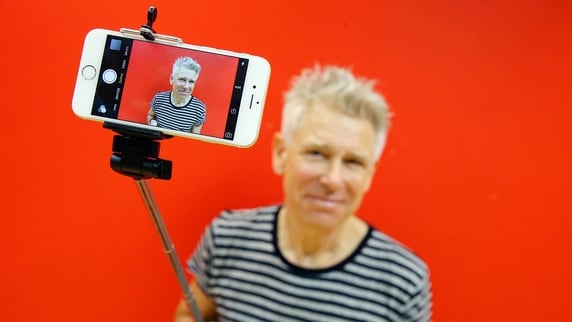
Adam Clayton talks about alcohol and his own  mental health struggles

"I've got it wrong at times in my life and relied on alcohol to get me through something."
U2 bassist Adam Clayton has spoken about the moment he realised he needed help in his struggle with his emotional wellbeing, telling Eoghan McDermott on 2fm, "I was fed up of being fed up."

Clayton's struggles with his alcohol use have been well documented, and he spoke of the role of his friends in helping him through the roughest point in his life.

The Dubliner is looking to demystify the stigma around mental health problems, and spoke to McDermott about Friday's #MindYourSelfie campaign on Twitter.


Adam Clayton at the #MindYourSelfie launch with (L-R) 2fm's Eoghan McDermott, model Alison Canavan, broadcaster Rebecca Horan and model Corina Grant
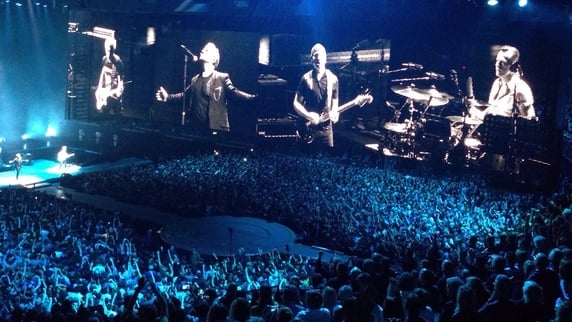
Clayton also discussed U2's four homecoming shows last November at the 3Arena. "It was really great to be able to play that show, in Dublin, indoors again, because we hadn't played Dublin indoors since the last Point show that we did way back when at the end of '89, really. And it was a real Dublin crowd. It was a real home crowd," he said.


"The first night, I think, we were kind of wandering around bumping into things because it was unfamiliar. But by the fourth night we were pretty comfortable."

When asked if his attention ever wandered while playing any of U2's classic tracks, Clayton replied that the songs were part of him.

"They're a little bit like an old, comfortable pair of shoes," he explained. "You've been amazing places in them. They've maybe seen better days but you know them inside out. Those songs, they mean so much to the people that come to the shows [that] it's kind of an amazing gift to have one of those songs and be able to perform it to people." 

For more on the campaign, see walkinmyshoes.ie or #mindyourselfie.  

http://www.rte.ie/http://www.joe.ie/

Monday, April 4, 2016

U2’s Incredible Career & Activism Is Honored With iHeartRadio Innovator Award


U2 received the Innovator Award at the iHeartRadio Music Awards on April 3, celebrating the band’s legendary career and activism. After Pharrell Williams honored a band that ‘reinvented’ music, Bono and The Edge dedicated their award to musicians still fighting for free speech around the world!
What a beautiful day! It’s a prestigious honor given from one innovator to another, as Pharrell Williams, 42, presented U2 –with the third ever Innovator Award at the iHeartRadio Music Awards!

I guess a band still using bass, guitar and drums, after rock and roll was invented, doesn’t sound so innovative,” Bono said after he and The Edge accepted the award at the April 3 awards ceremony. “But, it turns out rock and roll has more to do with spirit than flesh.” The two then celebrated Pharrell, the first ever iHeartRadio Innovator award winner and presented of this year’s award.

“They speak up for the voiceless and they tell the truth,” Pharrell said while introducing the band. “Millions of people are alive today because of what they’ve done…making AIDS medication affordable for all. These are the type of guys who, when they see a problem, they don’t just sing about it, they try to fix it.” Right on, Pharrell! Bono and The Edge even dedicated their award to those fighting for the right to perform freely in oppressive countries today!

“U2 is a band of activists, not only in music but in politics, popular culture and human rights,” John Sykes, president of iHeartMedia’s entertainment enterprises, said in a statement, per Billboard. They began as a punk band and that attitude still runs strong throughout their songwriting, albums and live performances. They will never stop testing the limits, and that’s why we are honored to recognize them with this Innovator Award.”

http://hollywoodlife.com/

Monday, March 28, 2016

Bono Speaks Out on Solving the Refugee Crisis


U2 frontman Bono is using his spotlight to shine a light on the plight of refugees, calling the refugee crisis a "global problem."

"We now know that what goes on in the Middle East or North Africa this year will spill onto the streets of Paris or Brussels next year and, God forbid, onto the streets of America," Bono said today on "Good Morning America," referring to the recent terrorist attacks in Brussels and Paris.

"We cannot separate ourselves from what’s going on in the outside world anymore. It’s our world. That’s what comes with globalization," he said. "With global impact, we’ve got responsibilities."

The 55-year-old rocker spoke to "GMA" from the Zaatari refugee camp in Jordan, home to approximately 80,000 refugees, mostly from Syria.
"The government here has told us they think one-quarter of their population are refugees," Bono said of Jordan. "Their generosity is right at its elastic limit."

"We need to get behind them and countries like them that are looking after us and trying to represent our values and I think that’s very important for Americans to hear that they have an ally in Jordan," he said.

Bono said the refugee crisis's explosion in growth means that all countries and citizens, "need to get more on top of it."

"This was a problem that was just a few years ago, 10,000 people a day were forcefully displaced from their homes," he said. "At the moment it’s 40,000 people per day displaced from their homes."

Bono is working with the One campaign he co-founded to activate the group's seven million members to help and encourage others to act.

The musician has taken to Instagram to document his experiences meeting with refugees. Bono and his U2 bandmates have also highlighted the crisis while on tour, showing footage of refugees on concert screens.

The band's message is that if a solution is not found for the refugee crisis, Europe will be no more.

"If what happened in Syria were, God forbid, to happen again to another country, it’s happening already in Libya but, God forbid, Nigeria, Europe is no longer viable," Bono said. "That’s a big problem for America."

"As well as being a big trade partner, Europe is America’s greatest ally," he continued. "Jordan, where I’m standing, is a really critical ally of America and, as it happens, a lesson of grace in the way they’re treating the refugee crisis."

As Bono spoke at the refugee camp, children could be seen running and playing behind him.

"Remember, all these kids, all these lives, they want to be friends of America. They want to be friends of liberty," Bono said. "These places can be sort of universities in teaching people our values or else they can be places that are dangerous to our ideas and who we are so let’s take the first course, not the second."

http://abcnews.go.com/

Thursday, November 12, 2015

Adam Clayton against Racism

U2 bassist Adam Clayton joines the ProAsyl campaign "Bassists Against Racists" and speaks out against racism.


We are tired of the apparently endless rabble-rousing against asylum seekers, foreigners in general, people with a different skin color, etc. So we say STOP! With the Pro Asyl Campaign "Guitarists & Bassists against Racists" (https://www.facebook.com/proasyl) we would like to wake up, but we also want to send a signal to all musicians, to actively support this campaign, as some media allready did.


Framus & Warwick support Pro Asyl with their new T-shirt campaign. The complete profit of 2.00 EUR per T-shirt will be donated directly to Pro Asyl. 


http://www.warwick.de/

Saturday, October 3, 2015

Humanitarian award for Adi Roche and Ali Hewson


Adi Roche and Ali Hewson will receive the Princess Grace Humanitarian Award from Prince Albert in Monaco tonight in recognition of their work in helping thousands of children affected by the Chernobyl nuclear disaster.

Ms Roche, peace campaigner and a former presidential candidate and Ms Hewson, Irish activist, businesswoman, and wife of U2 frontman Bono, have raised more than €100m for Chernobyl Children International.

The charity was established in response to the 1986 disaster at the Chernobyl nuclear power plant, 95km north of Kiev, near the Belarus border. More than 8m people continue to live in Chernobyl and contaminated areas of Belarus and Ukraine — many of them children.

Chernobyl Children International has brought around 25,000 children to Ireland for medical treatment and recuperation. The children stay with host families during the summer and the charity also flies surgeons to the Ukraine to carry out life-saving procedures on infants.

Ms Roche, from Clonmel, Co Tipperary, but now living in Cork with her husband Seán, established the charity in 1991 after doctors in Chernobyl appealed to anti-nuclear groups to help them get children out of the area. Two years later, Ms Hewson got involved with the charity and they have worked hard to keep it going during difficult financial years in 2012 and 2013 so it could continue with its life-saving programmes. The charity’s financial situation stabilised last year and while Ms Roche is a full-time executive, she works for the organisation on a voluntary basis.

The Ireland Fund of Monaco’s Princess Grace Humanitarian Award will be presented at a gala dinner in Monte Carlo.

Update:

ali h


Ali Hewson and Adi Roche were awarded the Princess Grace Humanitarian Award

Ireland’s leading ladies were centre stage at the Ireland Fund of Monaco Ball.
Bono’s wife Ali Hewson jetted into the city to receive the prestigious  Princess Grace Humanitarian Award from Prince Albert and was joined by the U2 frontman.

Joined by peace campaigner Adi Roche, both women were recognised for their work in helping thousands of children affected by the Chernobyl disaster.


Opting for a floor-length off the shoulder black gown, Ali paired the look with an oversized clutch.

http://www.irishexaminer.com/http://www.goss.ie/